

























By Infora Media
The Parish Development Model (PDM) remains at the Centre of government efforts to reduce poverty and accelerate grassroots economic transformation, with officials describing it as a key vehicle for shifting households from subsistence production to participation in the money economy.
Launched in 2022, the PDM is designed to channel public resources directly to parishes—the lowest administrative units—so that communities can identify and invest in income-generating activities suited to their local conditions. The programe targets households engaged in subsistence agriculture and informal activities, which government estimates make up a large proportion of Uganda’s population.
Under the model, each parish receives annual funding to support selected enterprises, primarily in agriculture, agro-processing, trade and small-scale manufacturing. Beneficiaries access low-interest revolving funds through Savings and Credit Cooperative Organizations (Saccos), with the aim of boosting production, increasing household incomes and creating jobs at the community level.
Government officials say early implementation has focused on strengthening parish-level institutions, improving financial inclusion and supporting priority value chains such as coffee and poultry, while also integrating extension services and market access support.
Success Stories from Beneficiaries
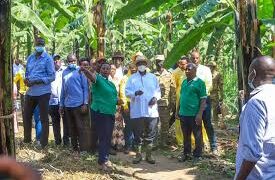
Across several districts, individual beneficiaries say the PDM has made a tangible difference in their livelihoods. In Kyankwanzi District, for example, Mr. Patrick Matovu invested his PDM loan in poultry farming—purchasing chicks, feed and building materials—and now earns regular income from egg sales, enabling him to reinvest in livestock and improve his family’s living standards.
In Luuka District, Mr. Eliot Mukasa used his Shs1 million PDM loan to expand into passion fruit and vegetable farming, later diversifying into goat rearing and home improvements. His progress prompted President Museveni to award him additional funds to scale his operations further, highlighting the potential for the model to generate entrepreneurial growth in rural areas.
In urban communities in Kampala, authorities observed increased household incomes where beneficiaries used PDM funds for small-scale enterprises. Visits by city officials to parishes such as Komamboga and Kisasi Market revealed that participants have expanded their businesses, leading to measurable improvements in household earnings.
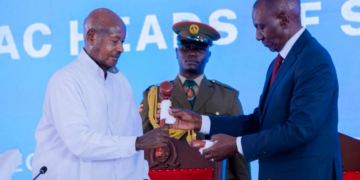
Despite these positive developments, concerns have emerged over delays in disbursements, limited technical capacity at parish level, and reports of misuse of funds in some areas. President Museveni has repeatedly warned local leaders and public officials against diverting or mismanaging PDM resources, emphasizing that funds meant for community development should be protected and reach the intended beneficiaries. Those found culpable, he said, will face sanctions and possible prosecution.
Government says it has strengthened monitoring mechanisms, including tighter oversight, digital tracking systems and routine audits, to address implementation gaps and improve transparency.
The success of the Parish Development Model will largely depend on consistent funding, strong local leadership and effective supervision and broader constraints such as access to markets, climate risks and value addition challenges—must be tackled for the programe to deliver sustainable impact.
As implementation continues, government maintains that the PDM remains a cornerstone of its strategy to reduce poverty, promote wealth creation and support inclusive growth. Whether the model will translate into lasting improvements in household livelihoods across the country remains under close scrutiny.