


























By Infora Media
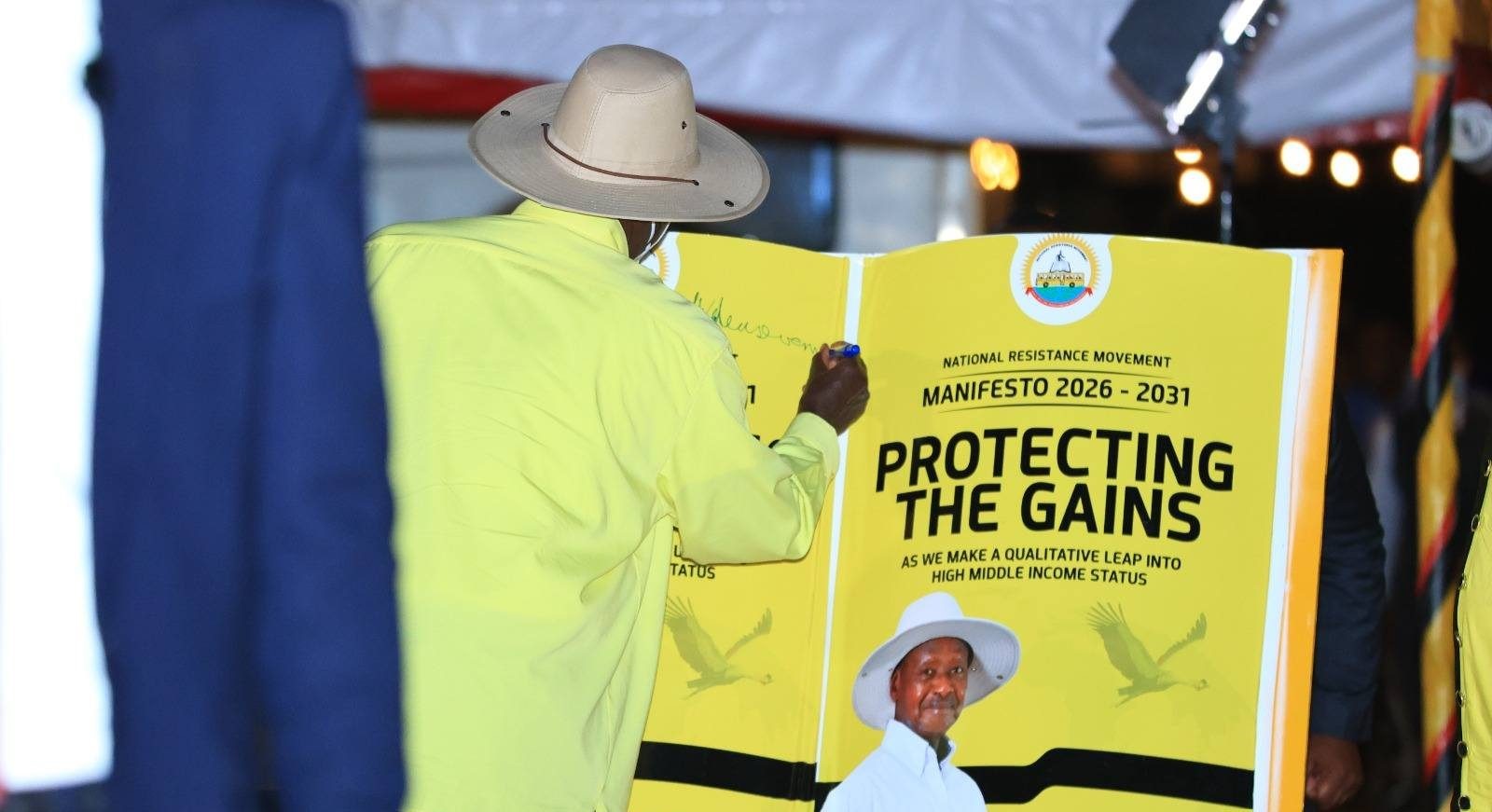
KAMPALA: The National Resistance Movement (NRM) has laid out an expansive economic and governance roadmap in its 2026–2031 manifesto, promising to steer Uganda into a “qualitative leap” toward high middle-income status. Launched in late 2025 under the theme Protecting the Gains and Securing a Qualitative Leap into High Middle-Income Status, the document blends continuity with renewed ambition, but leaves lingering questions about execution, accountability and impact.
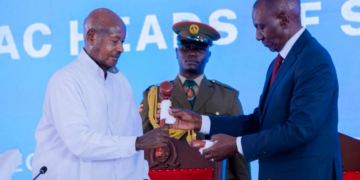
Speaking at the launch in Munyonyo, President Yoweri Kaguta Museveni framed peace and security as the NRM’s enduring legacy and the foundation upon which development must rest. “Our army is very strong. Nobody can bring war here,” he said, reinforcing the manifesto’s heavy emphasis on stability as a precondition for growth.
Economic Transformation and Jobs
At the heart of the manifesto is a renewed push for economic transformation through agro-industrialisation, manufacturing and value addition. The NRM argues that Uganda must decisively move away from exporting raw materials toward higher-value production capable of creating jobs, especially for the youth.
The strategy prioritises small and medium enterprises, agro-processing, access to affordable credit and skills development. According to Chris Baryomunsi, the manifesto acknowledges the pressures of a youthful population and the urgency of expanding employment pathways.
Uganda’s economy grew by an estimated 6.3 percent in the 2024/25 financial year, driven largely by agriculture and industry. While this performance offers momentum, economists caution that growth has not yet translated into sufficient, stable jobs — particularly outside urban centres.
“Growth numbers look impressive, but the real challenge is whether productivity and incomes rise at household level,” says economist Ramathan Ggoobi. “Without strong implementation and discipline, structural transformation can easily stall.”
Infrastructure, Connectivity and Regional Trade
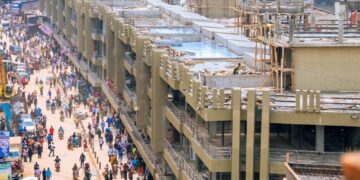
Infrastructure development features prominently as both a legacy claim and a future priority. Uganda’s paved road network has expanded dramatically over the past four decades, while electricity generation now exceeds 2,000 megawatts. Railway rehabilitation, airport upgrades and inland water transport are presented as key enablers of trade and investment.
The manifesto also reaffirms commitment to regional integration, positioning Uganda as a logistics and production hub within East Africa. NRM leaders argue that improved connectivity will lower business costs, link farmers to markets and attract manufacturing investment.
Human Capital: Education and Health
Human capital development remains central to the manifesto’s promise of inclusive growth. The NRM pledges expanded access to education, curriculum reforms aligned with labour market needs, and large-scale recruitment of teachers to improve classroom ratios.
In health, the focus is on strengthening infrastructure, staffing and service delivery. However, analysts note that long-standing challenges — funding gaps, drug stock-outs and uneven staffing — will require more than policy declarations to resolve.
Governance, Security and Parish-Level Empowerment
Security and governance are tightly interwoven throughout the document. Anti-corruption commitments are repeated, but enforcement mechanisms remain broadly stated.
The Parish Development Model (PDM), one of the NRM’s flagship initiatives, is earmarked for expanded funding, with allocations rising to Shs300 million per parish in metropolitan areas. Special grants for persons with disabilities and community leaders are also promised.
While PDM is positioned as a grassroots economic engine, concerns persist about elite capture and weak oversight. President Museveni has publicly acknowledged misuse of funds at local levels, signalling that tighter guidelines and accountability measures are forthcoming.
Progress Claims and the Accountability Gap
The manifesto highlights reductions in poverty levels, increased factory numbers, rising exports, improved electricity access and higher school enrolment as evidence of progress.