









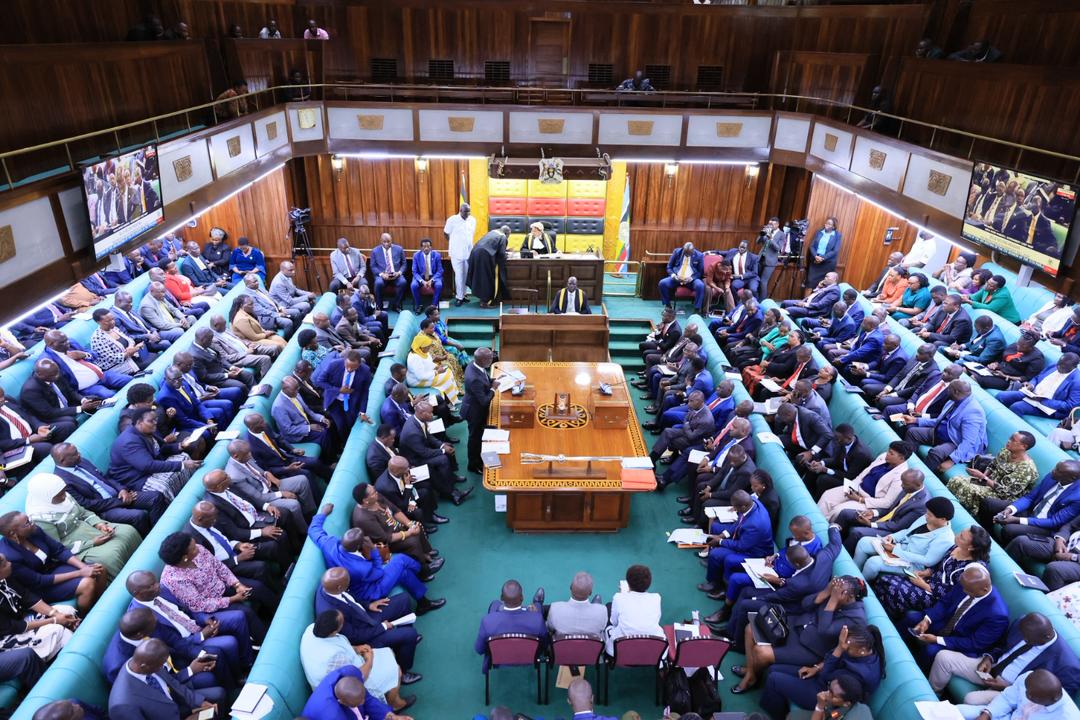
Kampala, Uganda — Uganda’s Parliament on Tuesday passed the highly contentious Protection of Sovereignty Bill, 2026, following a dramatic and often chaotic sitting marked by procedural disputes, heated exchanges, and fierce resistance from opposition lawmakers.
The tense session, presided over by Anita Among, saw the ruling side push the legislation through despite repeated attempts by the opposition, led by Joel Ssenyonyi, to halt or delay proceedings.
The developments unfolded in a charged atmosphere that exposed deepening divisions within the House over both the substance of the Bill and the manner in which it was handled.
Opposition Challenges Bill’s Legitimacy
Drama erupted even before debate formally commenced when Ssenyonyi questioned the legitimacy of the version presented before the House.
He argued that the Bill under consideration differed from the version previously tabled and was based on what he described as a “leaked” committee report.
However, Speaker Among swiftly dismissed the claims, insisting the document had been officially sanctioned.
“This report that was uploaded had my signature. I am the only one who can sanction documents to be uploaded,” she ruled.
Her decision cleared the way for Wilson Kajwengye, co-chairperson of the joint committee, to table the majority report backing the legislation.
Time Restrictions Spark Outrage
Tensions escalated sharply when the Speaker directed that all six minority reports be presented within just 35 minutes, the same amount of time allocated to the majority report.
The directive immediately drew fierce protest from opposition MPs, who argued it effectively gagged dissenting voices and undermined parliamentary scrutiny.
Jonathan Odur openly defied the instruction.
“When a member dissents singularly, the weight of the report demands equal time,” he argued.
Despite the objections, opposition lawmakers were restricted to approximately five minutes each, with some presentations cut short before completion.
Odur further accused committee leadership of suppressing robust debate during earlier deliberations, describing the process as fundamentally flawed.
His remarks prompted intervention from Speaker Among, who ordered sections of his statement expunged from the official parliamentary record.
Nambooze Warns Against Dangerous Precedent
Several other opposition legislators also condemned the handling of the debate.
Betty Nambooze warned that Parliament risked setting a dangerous precedent.
“The 11th Parliament should not behave as if it is the last. There will be others,” she cautioned.
She further alleged that the committee had ignored substantial public input, claiming that while only 57 memoranda were referenced in the report, more than 700 submissions had reportedly been received.
Wilfred Niwagaba also raised concerns over what he described as the marginalisation of dissenting voices.
Disorder and Disruptions
The debate was repeatedly interrupted by noise from the government side, with opposition members complaining that their microphones were barely audible.
Sarah Opendi appealed for order on the floor.
“There is a lot of noise. We cannot hear what she is reading,” she said.
Her plea underscored the increasingly disorderly nature of proceedings as tempers flared across both sides of the aisle.
Bill Passes Despite Resistance
Despite the uproar, the ruling side maintained firm control of proceedings, ultimately securing passage of the Bill.
The vote capped one of Parliament’s most contentious sittings in recent months and is likely to intensify political debate over the legislation in the days ahead.
For the opposition, Tuesday’s proceedings represented what they described as a troubling erosion of parliamentary fairness.
For the government side, it marked a decisive legislative victory.
But beyond the final vote, the chaotic sitting left lingering questions about process, transparency, and the state of democratic deliberation within Uganda’s legislature.