














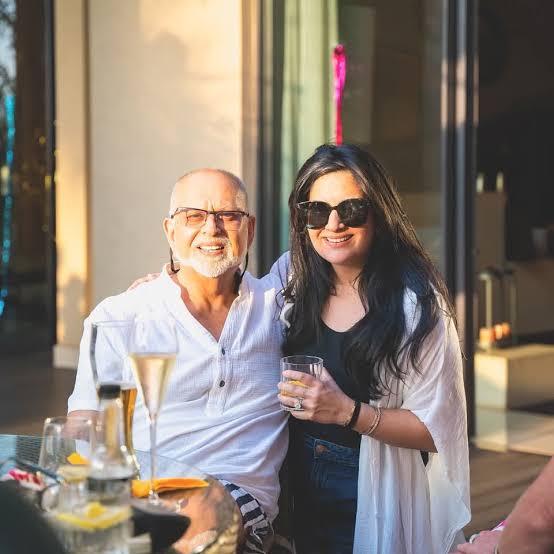
Uganda’s hospitality and real estate sectors are undergoing significant transformation, with a new generation of business leaders taking on greater responsibilities in shaping the country’s investment landscape. Among them is Sheena Ruparelia, a director at the Ruparelia Group who is playing a central role in the conglomerate’s hospitality and property development operations.
Daughter of businessman Dr Sudhir Ruparelia, Sheena has taken on responsibilities that extend beyond preserving an established family enterprise, participating in the management, renovation and development of some of Uganda’s prominent commercial and hospitality properties.
With an academic background in Economics and Accountancy from City University in London, she has developed her career within the family business through operational experience and involvement in major development projects.
Her professional journey reportedly began at Crane Bank, where she worked as a cashier before progressing into more senior responsibilities within the Ruparelia Group. The experience provided an opportunity to understand business operations from the ground level before assuming leadership responsibilities.
Today, her portfolio centres on the group’s hospitality and real estate divisions, two sectors that have become important components of its investment activities.
Since January 2017, Sheena has been involved in overseeing operations and renovation programmes across several established properties, including Speke Resort Munyonyo and Kabira Country Club.
Her responsibilities have also extended to residential and commercial developments, including Speke Apartments Kitante, Tagore Living, Bukoto Living and Windsor House.
In an interview with The Standard, she described her role as involving the supervision of hospitality and real estate operations under the guidance of the group’s chairman and fellow directors.
One of the projects she identifies as particularly significant is the Speke Resort Convention Centre, where she coordinated activities spanning design, procurement and implementation, working alongside consultants and contractors.
The facility has hosted major international gatherings, including the Non-Aligned Movement (NAM) and G77+China summits, placing Uganda on the international meetings and conference tourism map.
Sheena said the project required her to spend six months on-site, coordinating different aspects of its implementation to support its successful completion.
The development illustrates the growing importance of large conference facilities in Uganda’s efforts to attract international meetings, business travellers and tourism-related investment.
Beyond completed developments, Sheena is involved in a pipeline of projects intended to expand the group’s presence in hospitality and real estate.
These include a proposed 600-bedroom expansion of Kabira Country Club, the first phase of Pearl Business Park, Paradise Island Resort, One10 Apartments, Vista Naguru Apartments and an additional 48 apartments in Naguru.
Other developments include the Pool Pavilion, an extension of the conference facilities at Speke Resort.
The projects cover different segments of the property market, from residential accommodation and commercial office space to leisure tourism and conference infrastructure.
Their progress and eventual performance will be important in determining the group’s contribution to Uganda’s growing property and hospitality industries.
The expansion of such developments also creates opportunities for construction companies, professional consultants, suppliers and workers across different stages of project implementation.
However, their long-term economic contribution will depend on factors including occupancy levels, market demand, employment creation and the sustainability of the investments.
Beyond overseeing projects, Sheena has emphasised the importance of developing a workforce capable of adapting to changing business conditions.
Her leadership philosophy centres on sustainable growth, continuous innovation, improved operational standards and employee empowerment.
She has highlighted the need to modernise business systems while maintaining a collaborative working environment in which employees share responsibility for organisational performance.
The approach reflects a wider challenge facing established family-owned businesses in Uganda: maintaining the values that shaped their growth while introducing new management practices, technology and ideas to remain competitive.
For the Ruparelia Group, which operates across several sectors, this transition requires coordination between different business units and the ability to respond to changing consumer expectations.
Sheena’s interests also extend to philanthropy and community development through initiatives associated with the Ruparelia Foundation.
The foundation supports activities in education, women’s empowerment and sustainable development, reflecting the group’s stated commitment to extending its activities beyond commercial investment.
Her advocacy for women’s participation in leadership and economic development also forms part of her public engagement.
Increasing opportunities for women in business remains an important issue in Uganda, where access to capital, professional networks and leadership positions continues to shape the ability of women to establish and expand enterprises.
Through her professional and community engagements, Sheena has positioned women’s empowerment as part of her broader leadership interests.
The business environment in which Sheena operates was shaped by the entrepreneurial journey of her father, Dr Sudhir Ruparelia, who founded the Ruparelia Group.
Following the expulsion of Asians from Uganda during Idi Amin’s regime, Sudhir spent years outside the country before returning in 1985 with approximately $25,000 in savings.
He subsequently built a diversified business portfolio spanning real estate, hospitality, education and other commercial interests.
His experience has become a prominent example of entrepreneurship and private-sector investment in Uganda, with the group’s expansion contributing to the development of several commercial and hospitality properties.
For Sheena, the challenge is to participate in the continued development of that enterprise while responding to the demands of a changing business environment.
Her involvement in hospitality operations, residential developments and major construction projects places her within a generation of Ugandan business leaders increasingly taking responsibility for established enterprises.
As the Ruparelia Group pursues its expansion plans, the performance of the projects under her portfolio will help determine how the family business adapts to the next phase of Uganda’s economic and commercial development.
Ultimately, her professional journey highlights an important dimension of business succession: the transition from inheriting an established name to demonstrating leadership through operational responsibility, investment decisions and measurable business results.