
















By Patience Namuddu
Speke Resort Munyonyo has strengthened its position in Uganda’s hospitality industry after being named Sustainable Hotel of the Year at the 10th Ekkula Sustainable Tourism Awards 2026, beating three leading hotels in a competitive category.
The lakeside resort emerged as the winner ahead of Kampala Serena Hotel, Kampala Marriott Hotel and Kampala Sheraton Hotel, all of which had been shortlisted for the prestigious recognition.
The award acknowledges the resort’s efforts to promote environmentally responsible hospitality through energy efficiency, water conservation, waste management and community-based environmental initiatives.
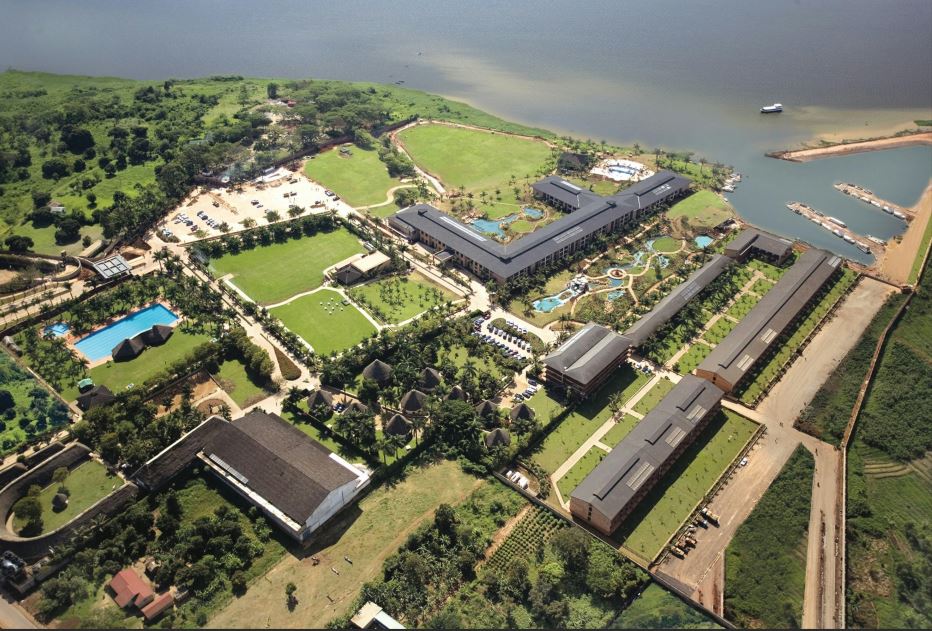
Located along the shores of Lake Victoria in Munyonyo, Speke Resort has increasingly incorporated sustainability practices into its hotel and conference operations, combining luxury accommodation with measures aimed at reducing its environmental footprint.
A key component of the resort’s sustainability programme is its investment in energy-saving technologies. These include solar-powered outdoor lighting, solar water-heating systems, LED lighting and electricity control systems in guest rooms that help minimise unnecessary power consumption.
The resort has also introduced water-saving measures, particularly at its convention centre, where low-flow taps, efficient toilet systems and automated irrigation technologies help reduce water wastage.
Its landscaping approach incorporates drought-resistant plants, mulching and drip irrigation, while moisture and rain sensors help regulate watering requirements.
In waste management, the facility has adopted composting practices, particularly for food waste, turning organic leftovers into useful material rather than sending them to conventional disposal facilities.
The resort also promotes responsible food procurement by prioritising local suppliers and seasonal produce, reducing reliance on imported food where possible.
Beyond environmental conservation, Speke Resort has embraced initiatives that give surplus resources a second life.
Its convention centre has reported donating approximately eight tonnes of surplus items, including furniture, computers and other convention materials, to institutions and community organisations.
The beneficiaries have included schools, libraries, churches, women’s centres and shelters, an approach that promotes reuse while extending support to organisations that may benefit from the donated resources.
Such practices demonstrate how sustainability in the hospitality industry can extend beyond environmental protection to include responsible purchasing, resource efficiency and social responsibility.
The resort’s location on Lake Victoria provides an important natural attraction, with its landscaped gardens and surrounding environment contributing to its leisure and tourism experience.
Visitors can enjoy boat excursions, fishing and birdwatching through its private marina, alongside other recreational facilities such as swimming pools, an equestrian centre, squash courts, a fitness centre and the Calabash Spa.
In February 2026, the resort extended its environmental efforts into the surrounding community through a lakeside clean-up exercise involving staff and residents of Munyonyo.
Participants collected litter, cleared walkways and engaged residents on proper waste disposal, highlighting the importance of collective responsibility in protecting the environment.
The exercise formed part of the resort’s corporate social responsibility activities aimed at promoting environmental awareness and maintaining a cleaner lakeside neighbourhood.
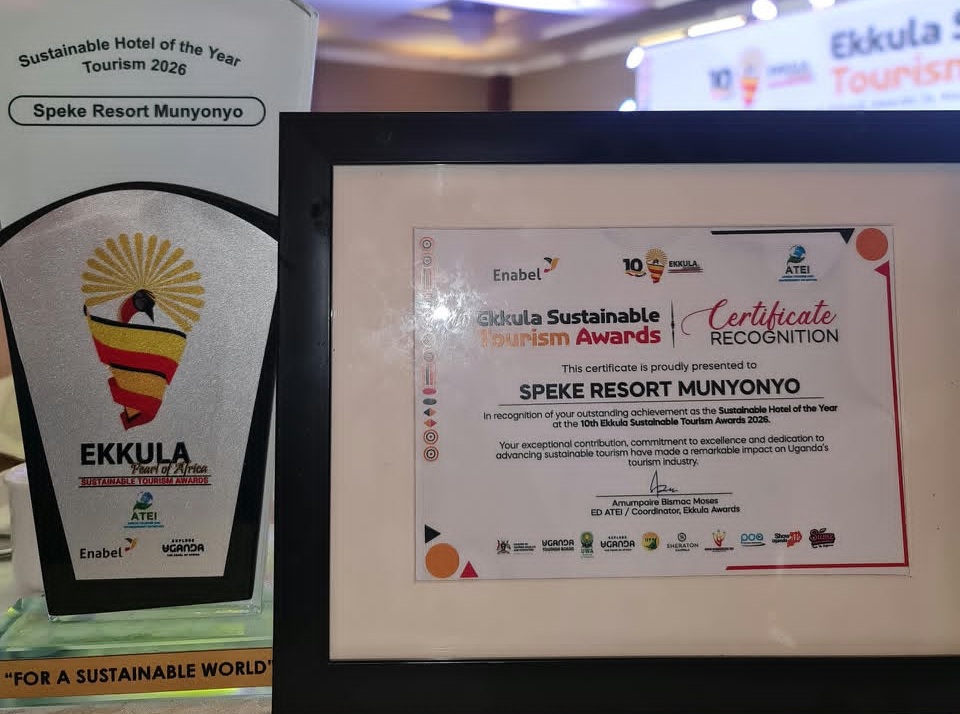
The latest Ekkula award places Speke Resort among the recognised players in Uganda’s growing sustainable tourism sector.
As environmental responsibility becomes an increasingly important consideration in tourism, hospitality establishments are facing greater expectations to balance quality guest experiences with responsible management of natural resources.
For Speke Resort Munyonyo, the recognition highlights the role of environmental conservation, community engagement and efficient resource management in shaping the future of Uganda’s hospitality industry.
Its victory over Kampala Serena, Kampala Marriott and Kampala Sheraton further underscores the competitive nature of the 2026 awards and the growing importance of sustainability in the country’s hotel sector.