










The National Resistance Movement (NRM), through its Office of the National Chairman (ONC), has called on government to review the country’s taxation and customs clearance framework, warning that existing practices are placing growing pressure on local traders and threatening the survival of small and medium-sized businesses.
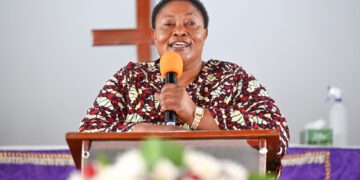
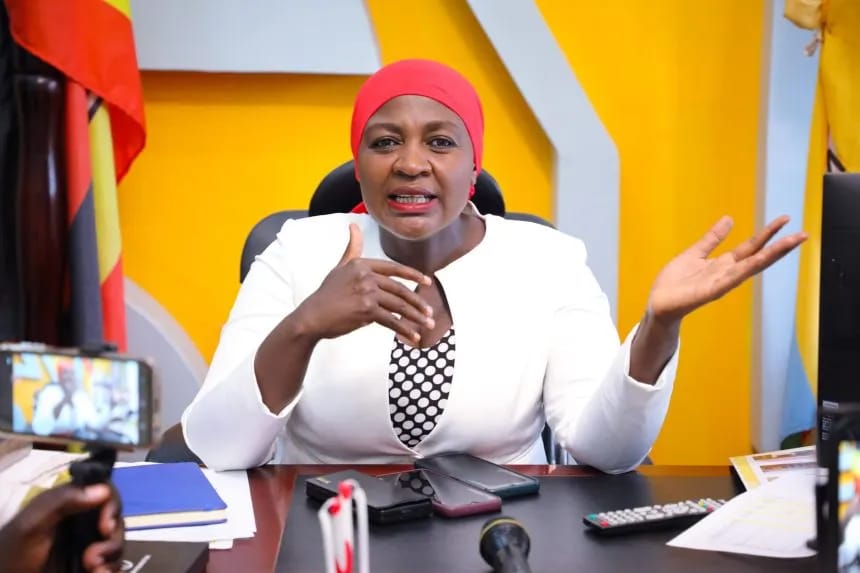
Addressing journalists at the ONC offices in Kyambogo on Friday, November 20, 2026, Hajjat Hadijah Namyalo Uzeiye, the Manager of the Office of the National Chairman and Senior Presidential Advisor on Political Affairs, said the concerns raised by traders over taxation, customs procedures and competition in the business sector required urgent government attention.
Namyalo said the NRM supports revenue mobilisation but believes taxation should be administered in a manner that allows legitimate businesses to grow, create employment and contribute to the national economy.
She observed that small and medium-sized traders play a significant role in supporting Ugandan households, paying school fees and providing employment opportunities, making their protection an important part of the country’s wealth-creation agenda.
In a statement issued after the press engagement, the ONC highlighted complaints from traders about alleged irregularities in customs clearance, including demands for informal payments, delays in releasing goods and additional charges despite completing the required Uganda Revenue Authority (URA) procedures.
According to the office, some traders have reported that their goods remain held even after paying the required taxes and obtaining release orders, while others allege that they are intercepted by security personnel on suspicion of under-clearance and subsequently subjected to additional payments or warehousing costs.
The ONC also raised concerns about allegations that goods are picked from traders’ shops during offloading, resulting in what it described as double charging.
It argued that traders who have fulfilled their legal obligations should not face additional financial demands that increase the cost of doing business.
The office further questioned the current clearance arrangements for goods imported from neighbouring countries, particularly Kenya, Tanzania and Sudan.
It noted that whereas such goods were previously cleared at border points, traders now report being required to transport them to the URA warehouse in Nakawa, where storage charges accumulate daily.
The ONC said the additional procedures and costs disproportionately affect small businesses, which often operate on limited capital and depend on quick stock turnover.
NRM wants textile and garment taxes reviewed
Namyalo’s press briefing also brought attention to the taxation of imported textiles and garments, with the ONC calling for a review of the existing duty structure.
Under the financial year 2025/2026 tax measures, which took effect on July 1, 2025, imported fabrics attract import duty of $2 per kilogram or 35 per cent of the customs value, whichever is higher. Imported garments attract $2.50 per kilogram or 35 per cent of the customs value, whichever is higher.
The charges are accompanied by 18 per cent Value Added Tax (VAT) and other applicable levies.
The ONC argued that the weight-based taxation model places a disproportionate burden on traders dealing in heavier products, including jeans and other garments.
It cited complaints from traders who reportedly had similar 40-foot containers of garments assessed at Shs500 million and Shs600 million respectively.
The office questioned the consistency of customs valuation and called on the Ministry of Finance and URA to establish a more transparent, predictable and competitive taxation framework.
It proposed replacing the per-kilogram duty structure with a system based on the actual value of goods and urged government to benchmark Uganda’s taxation regime against those of Kenya and Tanzania.
According to the ONC, such a review would help protect local businesses while maintaining Uganda’s competitiveness as a regional trading hub.
Foreign investors urged to respect local trade laws
The NRM also raised concerns about competition between Ugandan-owned retail businesses and some foreign investors who have reportedly expanded into wholesale, small-scale retail, direct consumer sales and hawking.
The office observed that local traders often establish businesses using personal savings, bank loans and other limited resources while meeting expenses such as rent, employee salaries and taxes.
It argued that competition becomes unfair when businesses with significantly greater financial resources and international supply chains enter trading activities that existing laws may restrict to Ugandan citizens.
However, the ONC clarified that its position was not against foreign investment, noting that Uganda needs investors who establish industries, create employment, transfer skills and contribute to economic development.
Instead, it called for the fair enforcement of the Trade (Licensing) Act and the Investment Code to ensure that all investors operate within the legal requirements governing their activities.
The office maintained that large-scale foreign investment should complement local enterprise development rather than displace Ugandan-owned businesses.
ONC links traders’ concerns to government’s wealth creation agenda
The office also connected the challenges facing local traders to the government’s broader wealth creation programmes, including the Parish Development Model (PDM), Emyooga and the Buy Uganda, Build Uganda policy.
It argued that government efforts to encourage Ugandans to establish businesses, access affordable financing and participate in economic activities must be supported by an environment that allows those enterprises to survive and expand.
The ONC said it would be contradictory to encourage citizens to borrow money and invest in businesses while allowing regulatory gaps and unfair competition to undermine their investments.
To address the concerns, the office proposed several interventions, including reviewing the taxation of textiles and garments, expediting the clearance of compliant traders’ goods and investigating allegations of informal payments, unnecessary interceptions and double charging.
It also called for a review of the requirement to transport goods from neighbouring countries to the Nakawa warehouse where such procedures result in avoidable storage costs.
Other recommendations included regular consultations between URA and traders, clear customs valuation guidelines, improved tax education, a functional complaints-handling mechanism and practical support for businesses implementing the Electronic Fiscal Receipting and Invoicing Solution (EFRIS).
The office further urged government to widen access to affordable credit to enable local entrepreneurs to expand their businesses.
Namyalo welcomes Museveni’s intervention
The ONC welcomed the intervention of President Yoweri Kaguta Museveni and the engagement led by Prime Minister Robinah Nabbanja in addressing the concerns raised by traders.
The office particularly acknowledged the inter-agency review of textile and garment taxation and the directive to expedite the clearance of goods belonging to compliant traders.
It called on the Ministries of Finance and Trade, URA, the Uganda Investment Authority and Parliament to work together to translate the interventions into lasting policy reforms.
The ONC also encouraged traders to continue meeting their lawful tax obligations, raise their concerns through recognised business associations and remain engaged in consultations as government works towards resolving the outstanding issues.
It emphasised that protecting local businesses should not be interpreted as opposing revenue collection or foreign investment, but rather as ensuring that economic policies create opportunities for Ugandans to participate and prosper.
“The traders of Uganda are not asking for favours. They are asking for fair rules, applied fairly, so that those who work hard, pay what they owe and follow the law can build something for their families,” the statement noted.
The office concluded by reaffirming the NRM’s commitment to revenue mobilisation, wealth creation and fair competition, stressing that the country’s economic growth must provide Ugandans with a fair opportunity to establish, operate and expand their businesses.
“Protect the Ugandan trader. Promote fair competition. Build a stronger economy,” the ONC stated.