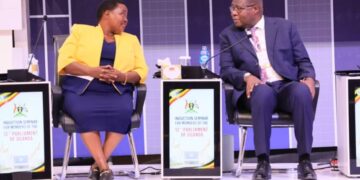













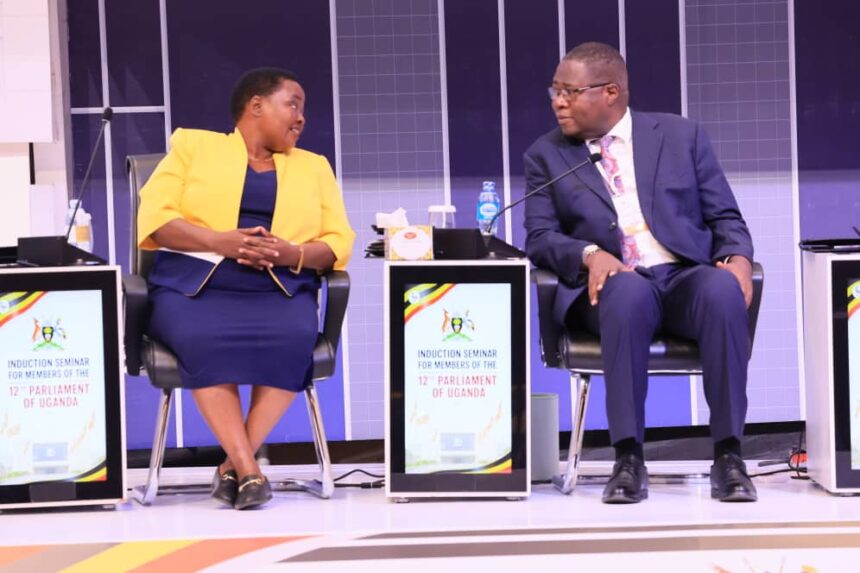
Munyonyo — Speaker of Parliament Jacob Oboth-Oboth has unveiled a seven-point agenda aimed at shaping the work of Uganda’s 12th Parliament, as newly elected legislators commenced a multi-day induction seminar at Speke Resort Munyonyo.
The induction programme, which brings together first-time and returning Members of Parliament, is intended to familiarise legislators with parliamentary procedures, oversight responsibilities, ethical standards and the national development agenda as they begin a new five-year term.
The opening session was attended by Prime Minister Robinah Nabbanja, Leader of the Opposition Joel Ssenyonyi, ministers, parliamentary commissioners and senior officials from the Parliamentary Commission.
In his keynote address, Mr Oboth-Oboth urged legislators to uphold integrity and strengthen Parliament’s oversight role, saying the institution must remain focused on delivering legislation and accountability that responds to citizens’ needs.
He outlined seven strategic priorities that will guide the 12th Parliament.
The priorities include adopting zero tolerance towards corruption, strengthening accountability through strict compliance with public finance management laws, promoting evidence-based and people-centred legislation, embracing results-based budgeting, building an open Parliament that promotes transparency and professionalism, and enhancing proactive oversight through real-time monitoring and evaluation of government programmes.
Addressing concerns about corruption, the Speaker said the vice extends beyond Parliament.
“Corruption is not the Speaker or Parliament alone; corruption is the whole of government,” Mr Oboth-Oboth said.
He called on legislators to work collectively with other arms of government and public institutions to promote accountability and improve service delivery.
The Speaker also challenged Members of Parliament to prioritise legislation informed by research and evidence while ensuring that laws enacted by the House directly address the aspirations and needs of Ugandans.
Opposition Leader Joel Ssenyonyi, in his address, urged lawmakers to protect the institutional independence of Parliament and remain committed to their constitutional oversight responsibilities regardless of political affiliation.
Mr Ssenyonyi identified three priorities for the new Parliament: safeguarding Parliament’s independence, preserving meaningful debate, and defending accountability without fear or favour.
He reminded legislators that public resources belong to citizens and not political actors.
“Let us defend the principle of accountability with equal determination, irrespective of who occupies public office. Public resources belong neither to government nor to Parliament. They belong to the people of Uganda,” Mr Ssenyonyi said.
He added that every appropriation approved by Parliament carries a constitutional obligation to ensure public funds are used for their intended purpose.
The induction programme is expected to continue over the coming days with sessions covering the Rules of Procedure, committee operations, ethics and the code of conduct, as well as national priorities, including preparations for Uganda’s oil and gas revenues and broader economic transformation.
The orientation comes at the beginning of the 12th Parliament’s tenure following the 2026 General Election.
Parliamentary officials say the programme is designed to equip legislators with the knowledge and skills required to effectively execute their legislative, oversight and representative functions throughout the new parliamentary term.