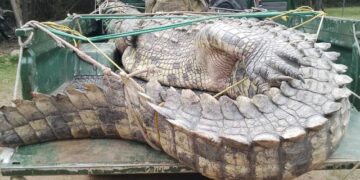









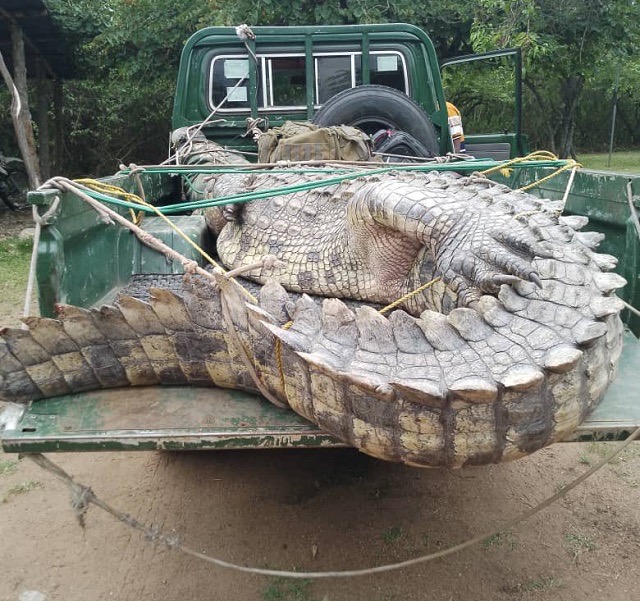
KITAGWENDA – The Uganda Wildlife Authority (UWA) has successfully captured and translocated a notorious Nile crocodile believed to have been responsible for a series of fatal attacks on residents and fishermen along the shores of Lake George in Kitagwenda District.
The overnight operation, conducted at Mahyoro Landing Site in Mahyoro Town Council, saw the dangerous reptile safely relocated to the River Nile within the Murchison Falls Conservation Area. The intervention forms part of UWA’s ongoing efforts to minimise human-wildlife conflict while ensuring the conservation of Uganda’s wildlife.
For years, fishing communities around Mahyoro have lived under constant fear following repeated crocodile attacks that claimed several lives and disrupted livelihoods. Residents say the captured crocodile had become notorious for targeting fishermen and other people carrying out daily activities along the lakeshore.
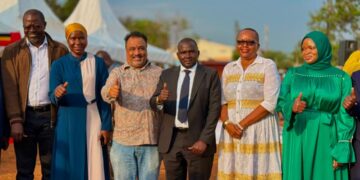
The successful operation has been welcomed by local leaders and residents, who described it as a major step towards restoring safety and confidence within the community.
Kitagwenda District Member of Parliament, Hon. Robert Mugabe, commended UWA for responding swiftly to the concerns of residents, saying the operation had brought hope to families that have lived in fear for years.
“The people are extremely appreciative. The excitement on the ground is very encouraging. They believe the crocodile captured is the same one responsible for many deaths because it was trapped exactly where several people had lost their lives,” Hon. Mugabe said.
He noted that residents are now optimistic that they can resume their daily activities with greater confidence following the removal of the reptile.
“People are happy because their lives are now secure. This operation has brought relief to the community, and I appeal to the UWA team to continue trapping other dangerous crocodiles in the remaining hotspots,” he added.
The legislator identified Nyakera Landing Site and Kainja Landing Site as other areas where crocodiles continue to pose a significant threat to local communities. He urged UWA to sustain its surveillance and response operations in those locations to further reduce the risk of attacks.
Lake George forms part of the Queen Elizabeth National Park ecosystem and supports a healthy population of Nile crocodiles, which naturally breed and nest in the lake’s islands, wetlands and papyrus swamps. However, the close interaction between wildlife and fishing communities operating along the shoreline has increased incidents of human-wildlife conflict over the years.
According to wildlife experts, crocodiles often become more active along shorelines during periods of high water levels and changing weather conditions, increasing the likelihood of encounters with people. Human activities such as fishing, washing and collecting water along lake margins also heighten the risk of attacks.
UWA says it continues to monitor conflict-prone areas across the country and responds to reports involving dangerous wildlife through scientific interventions, including the capture and relocation of problem animals where necessary.
The successful translocation of the Kitagwenda crocodile underscores UWA’s commitment to protecting both Uganda’s rich biodiversity and the lives of communities living alongside protected ecosystems.
Residents have expressed optimism that continued operations targeting rogue crocodiles in other high-risk areas will improve safety, allowing fishermen and lakeshore communities to pursue their livelihoods without constant fear while supporting the sustainable conservation of Uganda’s wildlife.