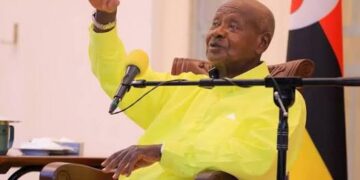








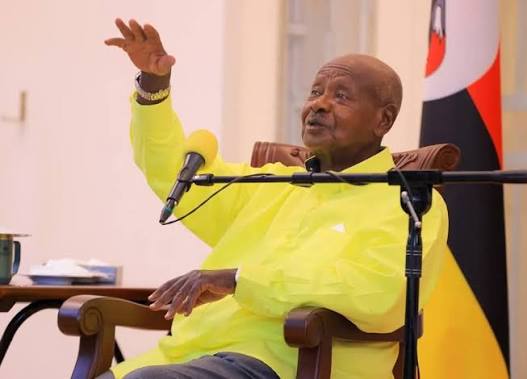
President Yoweri Museveni has used his 82nd birthday reflections to identify what he describes as three unfinished missions for Africa, placing economic integration, political cooperation and continental unity at the centre of his message.
In a reflection issued on September 15, the President thanked millions of well-wishers who sent him birthday messages before turning to what he described as broader challenges facing Africa.
The president said Africans should focus on building prosperity through an integrated continental market, strengthening strategic security through political cooperation and deepening what he called undugu, or brotherhood, among Africa’s diverse peoples.
He argued that progress on the three areas would provide a foundation for greater prosperity and strategic security on the continent.
A bigger African market
Museveni identified economic integration as the first unfinished mission, arguing that African countries need to create a common market that allows people who create wealth to operate beyond their individual national economies.
He said a more integrated African market would give businesses and other wealth creators access to a larger consumer base while strengthening economic cooperation between countries.
The call comes against the background of long-running efforts to deepen regional and continental integration through initiatives such as the East African Community and the African Continental Free Trade Area.
For Museveni, however, economic integration is not only about trade.
He linked it to Africa’s ability to build an economy capable of supporting its growing population and reducing dependence on external markets.
Political integration and security
The second mission he highlighted was strategic security.
Museveni argued that African countries should pursue political integration where circumstances allow, citing the proposed East African Federation as an example.
He said stronger political cooperation would enable countries to respond collectively to security challenges rather than addressing them solely within national borders.
The President’s argument reflects his long-standing advocacy for deeper East African integration, which he has repeatedly linked to the region’s economic and strategic interests.
The question of African brotherhood
Museveni’s third point was what he termed undugu, or brotherhood.
He argued that Africans should recognise their historical and cultural connections despite differences in language, ethnicity and national borders.
He referred to four broad linguistic groupings on the continent — Niger-Congo, Nilo-Saharan, Afro-Asiatic and Khoisan — as part of his argument that Africa’s large population shares historical connections that can provide a basis for closer cooperation.
According to Museveni, strengthening this sense of common identity would complement economic and political integration.
From birthday reflections to Uganda’s fuel supply
The President’s message also turned to a more immediate issue for Uganda — the country’s petroleum supply chain.
Museveni recounted how, during his time in government, he came to question the way Uganda procured petroleum products.
He said that after the fall of Idi Amin, government civil servants were restored to their positions, but that he later discovered what he described as weaknesses in parts of the public administration.
Museveni said he was unaware that Uganda had been purchasing petroleum products through intermediaries in Kenya until around 2019, when a Kenyan senator, Jirongo, raised the matter with him.
He said he subsequently asked then Energy Minister Irene Muloni to address the issue.
According to Museveni, significant changes came in 2023 when Uganda entered into an arrangement with Vitol, a major international energy trading company and bulk petroleum supplier.
Lower procurement costs
Museveni cited figures comparing the costs under the earlier arrangement with the new agreement.
For diesel, he said the cost per metric tonne fell from $118 to $83, while petrol declined from $97.50 to $61.50.
Aviation fuel, according to the figures he provided, fell from $114.25 to $79.25 per metric tonne.
Museveni attributed the changes to the new procurement arrangement and thanked Kenyan President William Ruto for supporting the agreement.
He said Kenya subsequently allowed Uganda to pump petroleum products through the country’s oil pipeline, with Uganda acquiring a 20.15 per cent shareholding in the pipeline.
“We are very happy with the Kenya Government of President Ruto on this matter,” Museveni said.
A wider energy strategy
The petroleum account forms part of a broader effort by Uganda to strengthen its fuel storage, import and distribution infrastructure as the country prepares for commercial oil production.
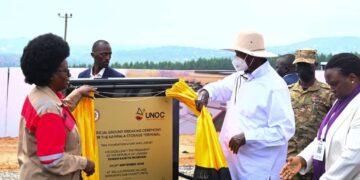
Uganda has been developing additional petroleum storage capacity and regional supply arrangements, while the Uganda National Oil Company has taken a larger role in the country’s petroleum supply chain.
The developments have also placed regional infrastructure at the centre of Uganda’s energy strategy, with the country relying on neighbouring states and cross-border systems for the movement of petroleum products.
Museveni’s birthday reflection therefore moved beyond a personal milestone to issues ranging from continental integration to Uganda’s energy security.
At 82, the President presented the message as an assessment of unfinished work — arguing that Africa’s future will depend on how effectively its countries cooperate economically, politically and socially, while Uganda continues to build systems intended to secure its own strategic interests.