













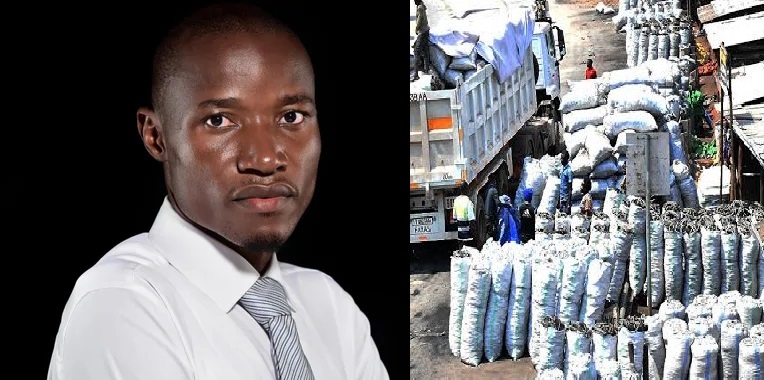
By Hakim Kyeswa
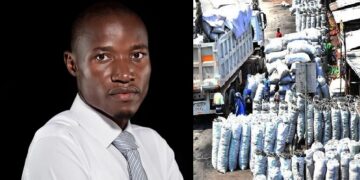
Uganda’s debate over charcoal restrictions has brought a critical policy question to the forefront: how can the country protect its forests without making life harder for millions of citizens who depend on charcoal and firewood for cooking?
Although Parliament’s reported pause on the proposed total ban has offered temporary relief to affected communities, concerns remain about how restrictions will be implemented and whether affordable alternatives will be available.
As a loyal National Resistance Movement (NRM) cadre, I believe environmental conservation must be pursued alongside the protection of ordinary Ugandans, or Omuntu w’awansi, a principle frequently emphasised by President Yoweri Kaguta Museveni.
Criticising a policy’s implementation should not automatically be interpreted as opposing government. Rather, constructive criticism provides an opportunity to address gaps, improve public policy and ensure that development initiatives benefit the people they are intended to serve.
The position raised by the Senior Presidential Advisor on Political Affairs and Manager of the Office of the National Chairman (ONC), Hajjat Hadijah Namyalo Uzeiye, reflects this concern: government should make cleaner cooking alternatives affordable and accessible before expecting low-income households to abandon charcoal.
Uganda’s clean cooking challenge
For many Ugandan households, charcoal and firewood remain essential sources of cooking energy. Moving away from these fuels is important for reducing pressure on forests, but the transition must reflect the financial circumstances of the people affected.
According to the statistics cited in this debate, approximately 73 per cent of Ugandans rely on firewood, while another 21 per cent depend on charcoal. These figures should be checked against the latest Uganda Bureau of Statistics (UBOS) data before publication, including the relevant reporting year and definitions.
The underlying concern, however, is clear: many families cannot readily afford alternatives such as liquefied petroleum gas (LPG) or electric cooking.
Providing a household with a gas cooker alone does not solve the problem if the family cannot afford refills. Likewise, encouraging electric cooking will have limited impact where appliances, electricity costs and reliable access to power remain obstacles.
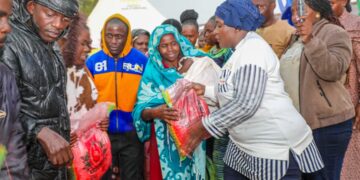
As Namyalo has argued, government should consider providing gas cookers to vulnerable households, supporting refill costs and educating citizens on safe use. Such measures could make the transition more practical for families with limited incomes.
Environmental protection must be fair and consistent
Another concern is whether environmental laws are being enforced consistently across different groups.
Small-scale charcoal traders and transporters often depend on the trade to earn a living. Enforcement measures that disrupt their businesses without providing viable alternatives can affect household incomes and livelihoods.
At the same time, forest destruction, wetland encroachment and other forms of environmental degradation require effective investigation and enforcement, regardless of who is responsible.
Environmental authorities should ensure that laws are applied fairly to small-scale operators, commercial enterprises and individuals who violate conservation regulations. Allegations of illegal activities, corruption or selective enforcement should be investigated and addressed through the appropriate institutions.
The objective should be to protect natural resources, not simply to penalise those whose livelihoods are connected to charcoal.
Commercial tree planting offers a practical alternative
Uganda should give greater attention to commercial forestry, afforestation and reafforestation as part of its response to environmental degradation.
Farmers and landowners who grow trees specifically for sustainable harvesting can contribute to the supply of wood products while creating employment and business opportunities. With appropriate guidance, licensing and monitoring, commercial woodlots can form part of a more sustainable charcoal value chain.
Government, through the relevant ministries and local authorities, should explore a transparent regulatory framework for legally produced charcoal. This could include clear licensing requirements, sustainable harvesting standards, traceability and measures to prevent the exploitation of protected forests.
However, commercial tree planting must complement—not replace—the protection of natural forests, wetlands and other sensitive ecosystems.
Namyalo has also called for greater emphasis on tree planting and community sensitisation, including support for communities to adopt sustainable practices.
Four practical steps government can take
Instead of relying primarily on restrictions, government should consider a phased approach that combines environmental protection with economic support.
1. Make clean cooking affordable. Provide targeted assistance to low-income households to acquire gas cookers and meet refill costs. Support should be designed to reach those who need it most.
2. Expand access to alternative cooking technologies. Promote briquettes, improved cookstoves, LPG and electric cooking where practical and affordable. Public education should explain safe use, costs and the benefits of each option.
3. Invest in tree planting and sustainable forestry. Support farmers, communities and private investors to establish woodlots, restore degraded land and adopt sustainable harvesting practices.
4. Strengthen fair and accountable enforcement. Investigate illegal forest destruction, wetland encroachment and alleged corruption. Apply environmental laws consistently while giving affected communities clear information about the rules and available alternatives.
These measures would allow government to pursue conservation while reducing the risk that restrictions place disproportionate pressure on poor households.
Keep ordinary Ugandans at the centre of policy
The NRM’s development agenda places emphasis on improving livelihoods and expanding economic opportunities. Environmental policies should therefore be implemented in a way that recognises the realities facing families, farmers, traders and small businesses.
A transition to cleaner cooking energy cannot succeed through restrictions alone. It requires investment, public education, affordable technology and meaningful engagement with the communities expected to change their daily practices.
Government should listen to concerns raised by citizens and its own leaders, assess the likely impact of proposed measures and make adjustments where necessary.
The choice should not be between protecting Uganda’s environment and protecting the welfare of its people. Both objectives can be pursued through a practical, well-funded and fairly implemented policy.
As Namyalo has emphasised, “Constructive criticism is not disloyalty. Accountability is patriotism, and the people must remain at the centre of every public policy.”
That principle should guide the debate: protect the forests, expand access to cleaner energy and ensure that ordinary Ugandans are not left to bear the cost of the transition alone.
The writer, Hakim Kyeswa, is the Head of Media and Communication at the Office of the National Chairman (ONC).