















The Uganda Wildlife Authority (UWA) has intensified efforts to protect wildlife and restore habitats, conducting 25,621 patrols and reporting a decline in human-wildlife conflict incidents during the 2025/2026 financial year.
The Authority recorded a reduction in reported human-wildlife conflict incidents from 6,557 in the previous financial year to 4,290, while enforcement operations resulted in the apprehension of 2,931 suspects and the recovery of 43,642 illegal hunting and related implements.
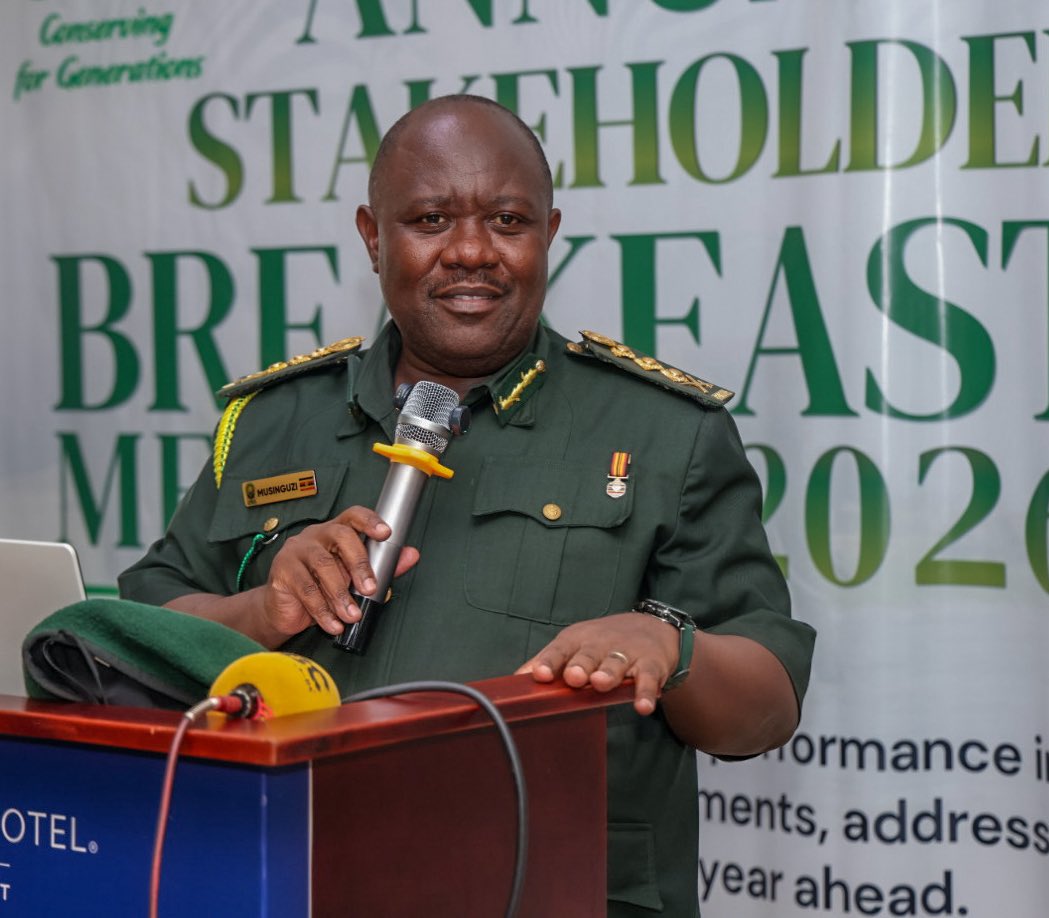
UWA Executive Director Dr James Musinguzi presented the figures during the Authority’s Annual Stakeholder Breakfast Meeting 2026, held at Skyz Hotel in Naguru, Kampala, where officials reviewed the institution’s performance and outlined priorities for wildlife conservation and tourism development.
The meeting brought together stakeholders to assess UWA’s contribution to national development, discuss challenges affecting conservation and explore ways of strengthening partnerships and sustainable financing.
UWA intensifies wildlife crime enforcement
During the financial year, UWA seized 4,540.54 kilogrammes of wildlife products and investigated 1,237 wildlife crime cases involving 2,189 suspects, according to the performance figures presented at the meeting.
The Authority also expanded ecosystem management activities, controlling invasive and problematic plant species across 7,464.94 hectares, up from 4,299.97 hectares in the previous financial year.
It maintained 1,213.1 kilometres of protected-area boundaries, restored 60.25 hectares of degraded habitats and translocated 90 animals to support species conservation.
One of the notable achievements was the reintroduction of eight southern white rhinos to Ajai Wildlife Reserve and Kidepo Valley National Park, restoring the species to landscapes where it had become locally extinct.
UWA also assumed management responsibility for Bugoma Central Forest Reserve in May 2026, expanding its conservation responsibilities.
Dr Musinguzi said the progress was achieved despite resource constraints, habitat degradation and growing operational demands associated with wildlife protection.
Communities benefit from conservation
UWA continued to support communities neighbouring protected areas through livelihood initiatives, conservation education and revenue-sharing programmes.
During the year, the Authority supported 1,282 community livelihood groups, conducted 2,421 community meetings and disbursed Shs5.51 billion through its revenue-sharing programme.
The programme is intended to ensure that communities living alongside protected areas benefit from conservation and have incentives to support wildlife protection.
Reported human-wildlife conflict incidents declined from 6,557 to 4,290 during the reporting period. However, communities neighbouring protected areas continue to face challenges when wild animals stray into farms and settlements, threatening livelihoods and, in some cases, human safety.
The decline in reported incidents is encouraging, but sustained investment in preventive measures, public awareness and community engagement remains important to reducing conflict.
UWA has continued to emphasise the need to balance wildlife conservation with the needs of people living near protected areas.
Tourism visits decline as concession revenue rises
UWA recorded 865,805 visits across protected areas and wildlife conservation education facilities during the 2025/2026 financial year, down from 943,837 visits in 2024/2025.
Despite the decline in overall visitation, concession revenue reached Shs16.4 billion against a target of Shs5 billion, according to the figures presented at the meeting.
The Authority prepared 19 concession opportunities and identified 18 investment sites to attract private-sector investors, diversify tourism products and expand services across protected areas.
The performance highlights the role of private-sector partnerships and commercial investment in supporting conservation financing.
However, the decline in visitor numbers also points to the importance of continuing to develop tourism products, improve visitor experiences and attract more domestic and international tourists.
More rangers recruited
At the close of the financial year, 1,362 newly recruited rangers were undergoing paramilitary and wildlife conservation training.
The recruitment and training programme is intended to strengthen UWA’s operational capacity as it continues to protect wildlife, monitor protected areas and respond to conservation-related threats.
The Authority also invested in equipment, technology and operational systems to improve its ability to carry out its mandate.
In public engagement, UWA established UWA Online TV and recorded 664 earned-media stories during the reporting period, with 75.6 per cent assessed as positive.
The communication initiatives form part of efforts to increase public awareness of wildlife conservation and the role of communities and other stakeholders in protecting Uganda’s natural heritage.
Board calls for accountability and partnerships
UWA Board of Trustees Chairman Professor James Kalema said the Authority remained committed to protecting Uganda’s wildlife heritage while ensuring conservation contributes to national development, tourism growth and community wellbeing.
He highlighted the Shs5.51 billion distributed through the revenue-sharing programme and the reintroduction of southern white rhinos as important milestones during the financial year.
Prof Kalema said the Board would continue to prioritise accountability, prudent resource management, good governance and institutional efficiency to improve conservation outcomes.
He also acknowledged challenges arising from human-wildlife conflict, pressure on habitats, inadequate resources and the expansion of UWA’s management responsibilities.
The Board and management called for stronger partnerships with government, the private sector, conservation organisations and local communities to address funding and operational challenges facing wildlife conservation.
Priorities for the next five years
As UWA implements its 2025/2026–2029/2030 Strategic Plan, its priorities include strengthening law enforcement, restoring degraded ecosystems, reducing human-wildlife conflict, diversifying tourism products and increasing the benefits communities receive from conservation.
The Authority’s ability to achieve these objectives will depend on sustained financing, effective enforcement, investment in tourism infrastructure and stronger relationships with communities living alongside protected areas.
UWA’s latest performance figures point to progress in wildlife protection and community engagement, while the decline in tourist visits and continued human-wildlife conflict underline the need for further action.
The challenge ahead will be to sustain conservation gains while ensuring that wildlife protection supports local livelihoods and contributes to Uganda’s tourism and economic development.