














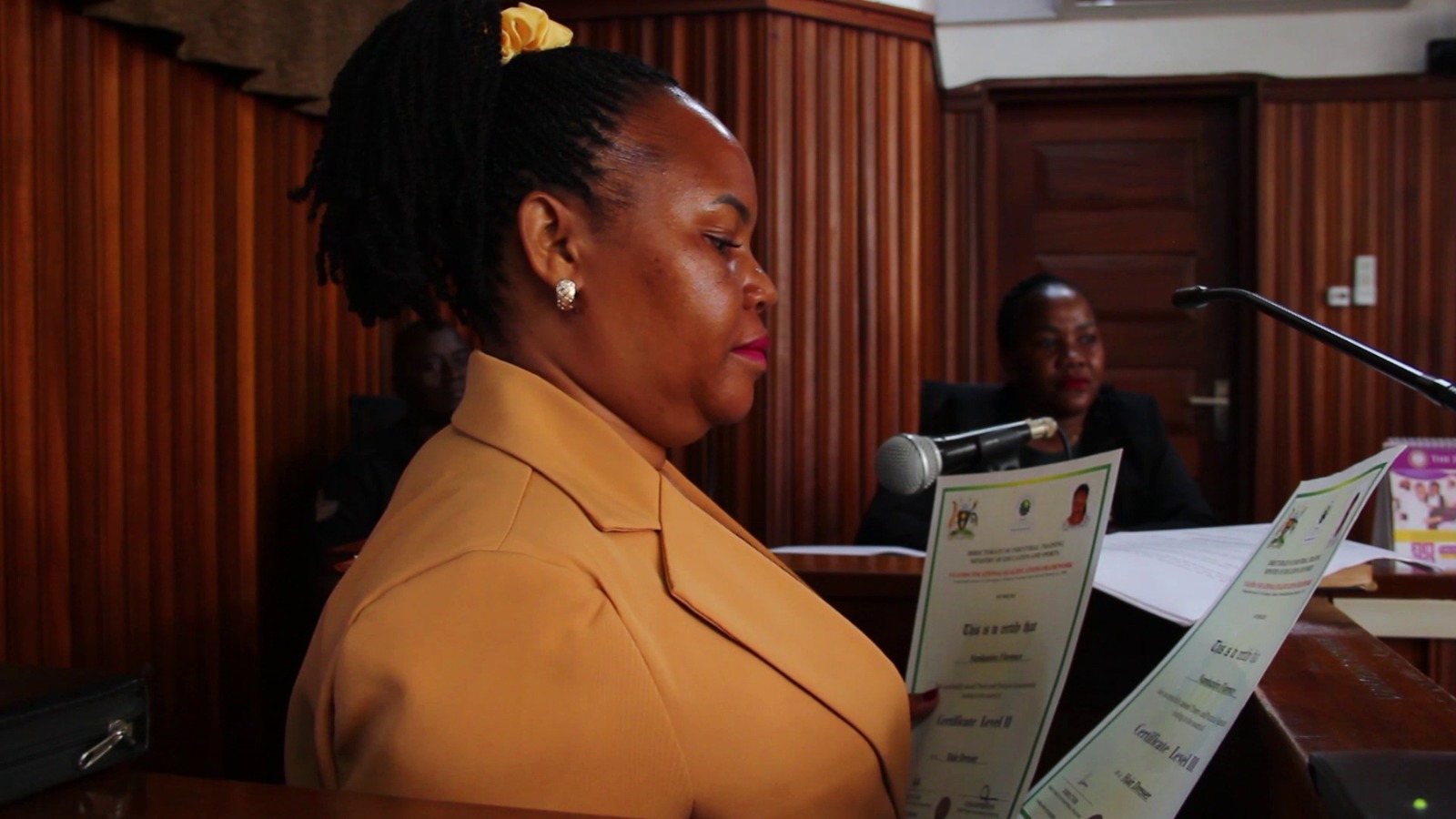
MASAKA. Sembabule District Woman Member of Parliament Florence Nambaziira has told the High Court in Masaka that she never sat the Primary Leaving Examination (PLE) or the Uganda Certificate of Education (UCE), as a petition challenging her election puts her academic qualifications under scrutiny.
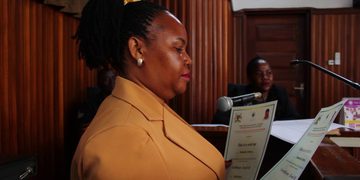
Ms Nambaziira, a member of the ruling National Resistance Movement (NRM), made the disclosure while testifying before Justice Christine Akello in a petition filed by her rival, Mary Begumisa, an independent candidate who is contesting the outcome of the parliamentary election.
The petition also raises allegations of electoral irregularities, including concerns about declaration of results forms and claims of intimidation during the electoral process.
During cross-examination, Ms Nambaziira said she had attended school but did not sit the Primary Seven examinations or proceed to Senior Four. Instead, she pursued vocational training in hairdressing, which she said had equipped her with practical skills and enabled her to establish a business.
“I didn’t study Primary Seven and I didn’t do PLE, but I went to a vocational school. I am an expert in plaiting hair, washing hair, styling it and applying makeup,” she told court.
She said she obtained three certificates covering the first, second and third grades of hairdressing training.
According to the legislator, her training included both theoretical and practical lessons, as well as instruction in business management and customer care.
“We were doing both theory and practicals. They taught us how to manage our businesses and how to treat clients,” she said.
Ms Nambaziira added that she had established a company through which she trains other people in hairdressing and the manufacture of hair relaxers.
“I am a professional. I am no longer studying, but I teach others this profession,” she told court, expressing confidence that she would successfully defend her election.
The court also heard testimony from Moses Mugizi, an official of the Uganda National Examinations Board (UNEB), who appeared remotely via Zoom to discuss Ms Nambaziira’s academic documents.
Mr Mugizi told court that the documents presented did not qualify her for university admission. He also referred to the National Council for Higher Education (NCHE) in relation to higher education qualifications.
The evidence is expected to inform the court’s assessment of the documents and whether they satisfy the legal requirements applicable to parliamentary candidates.
However, the absence of PLE and UCE results does not, by itself, settle the question of eligibility. The court must consider the relevant legal requirements, the nature of the qualifications presented and the evidence adduced by both sides.
Ms Begumisa and her lawyer, Nelson Ainebyona, are challenging the validity and sufficiency of the documents relied upon by the legislator.
The central issue is whether Ms Nambaziira meets the academic qualifications prescribed by law for election to Parliament.
Beyond the academic dispute, the petition also examines the conduct of the election and the handling of declaration of results forms, commonly known as DR forms.
Sembabule District Electoral Officer Gracious Aryaija testified about the signing of the forms by polling agents representing different candidates.
Mr Aryaija told court that agents representing Ms Begumisa had signed declaration forms in some polling areas despite the candidates being political rivals.
He suggested that some agents representing other candidates might have declined to sign after realising that their preferred candidates had lost in particular areas.
The testimony forms part of the wider challenge to the electoral process. The significance of the evidence will depend on the circumstances surrounding the disputed forms and the applicable electoral law.
During the proceedings, Justice Akello also gave residents of Sembabule an opportunity to express their views on the conduct of the election.
Some residents alleged that violence occurred during the campaign period and accused the army of involvement. Others claimed that individuals had been intimidated or forced to sign declaration forms.
The residents also raised concerns about the conduct of electoral officials and called for a fair determination of the petition.
The allegations remain claims and must be assessed against the evidence before court. Their presentation does not, on its own, establish that electoral malpractice occurred.
The case therefore places two key questions before the court: whether Ms Nambaziira met the legal requirements to contest the parliamentary seat and whether the alleged irregularities affected the validity of her election.
The court’s eventual decision will depend on the evidence, the applicable law and the findings made by the judge.