














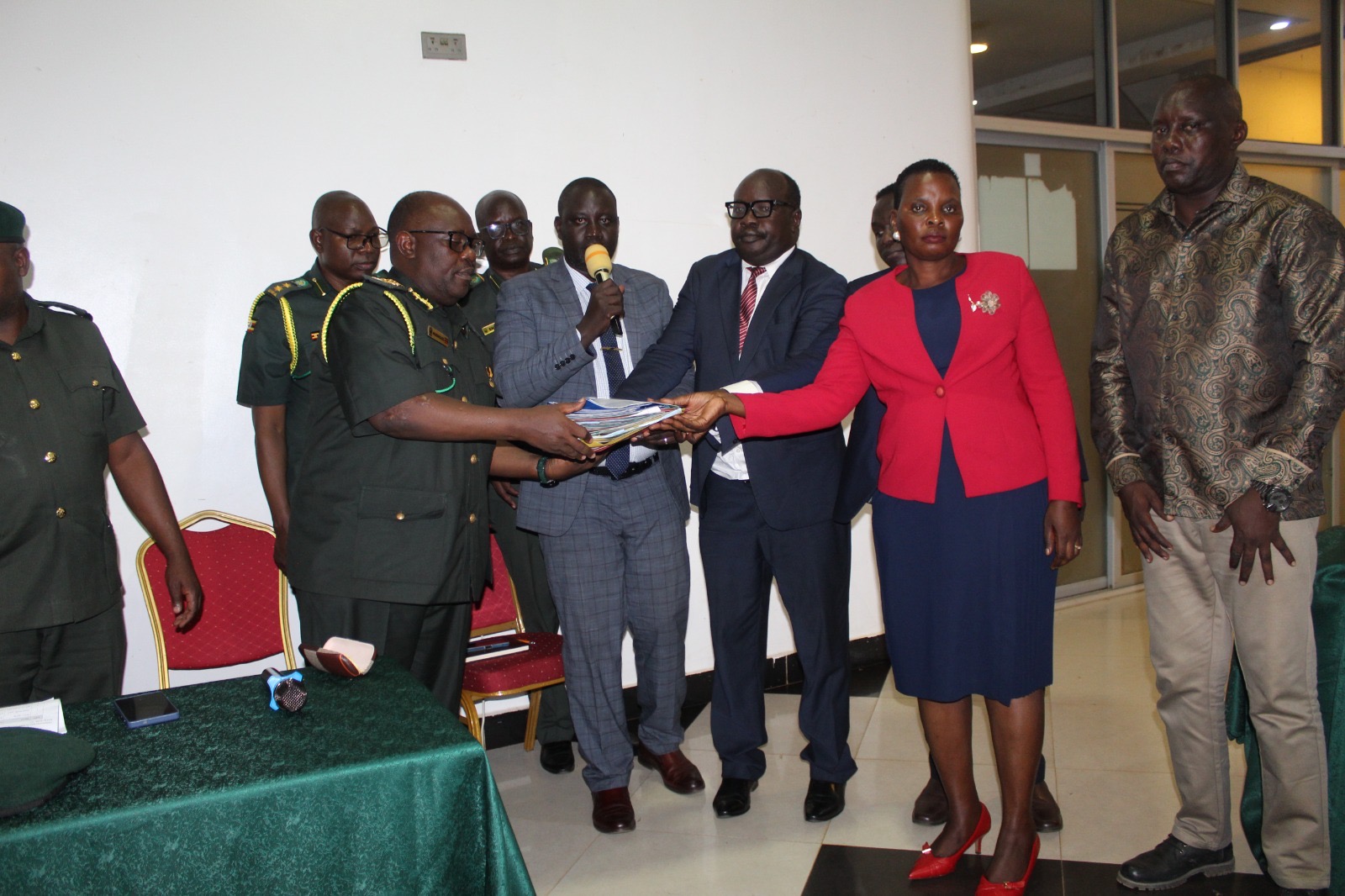
The Uganda Wildlife Authority (UWA) has pledged to strengthen its response to human-wildlife conflicts in Agago District following reports of deaths, injuries and extensive crop destruction caused by elephants and buffaloes.
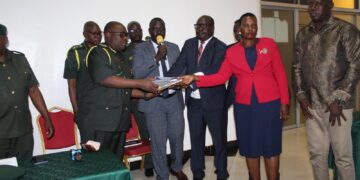
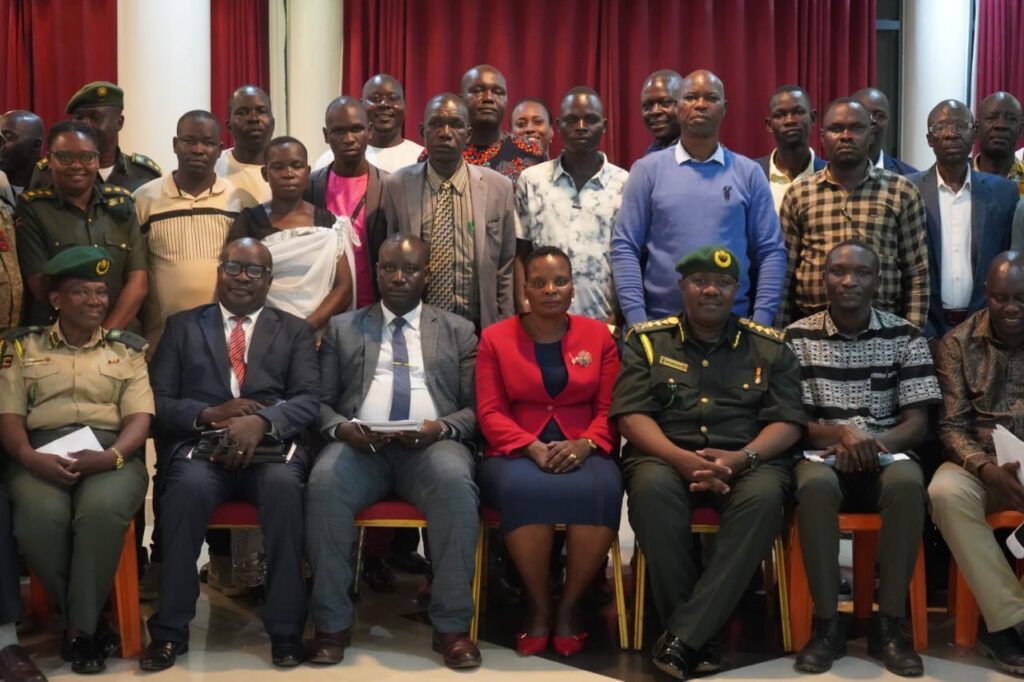
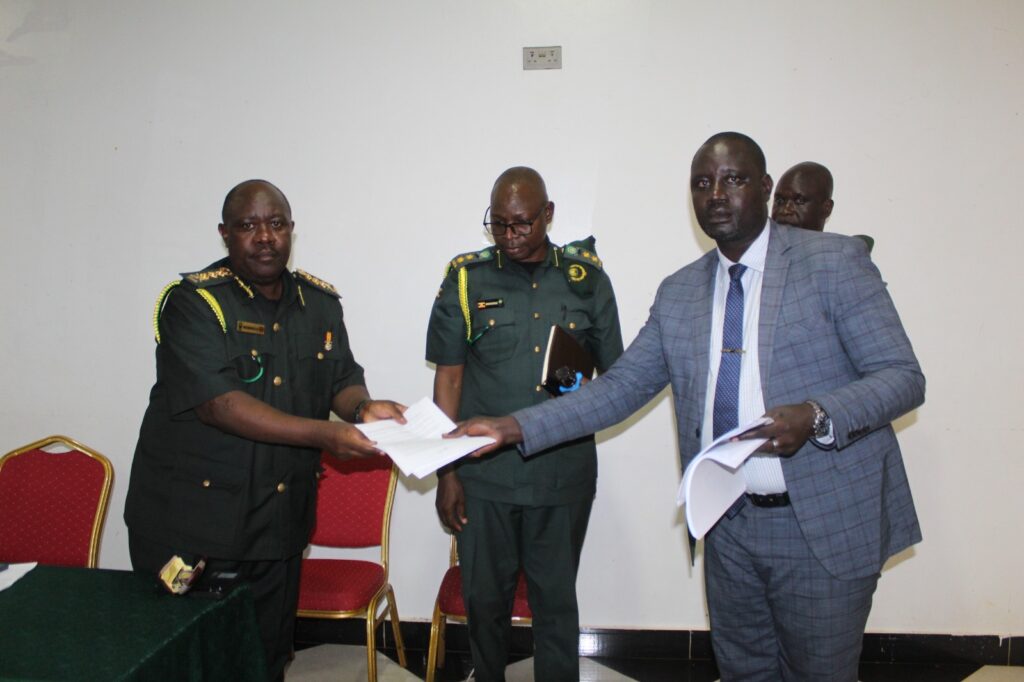
UWA Executive Director Dr James Musinguzi made the commitments during a meeting with leaders from Agago District at the Floating Restaurant in Entebbe, where officials presented concerns about wildlife entering communities from the Kidepo Valley Conservation Area.
The delegation was led by State Minister for Northern Uganda Beatrice Akori Akello and included Members of Parliament, the Resident District Commissioner, LC5 Chairperson Wilson Otto, LC3 chairpersons and councillors representing 14 affected sub-counties.
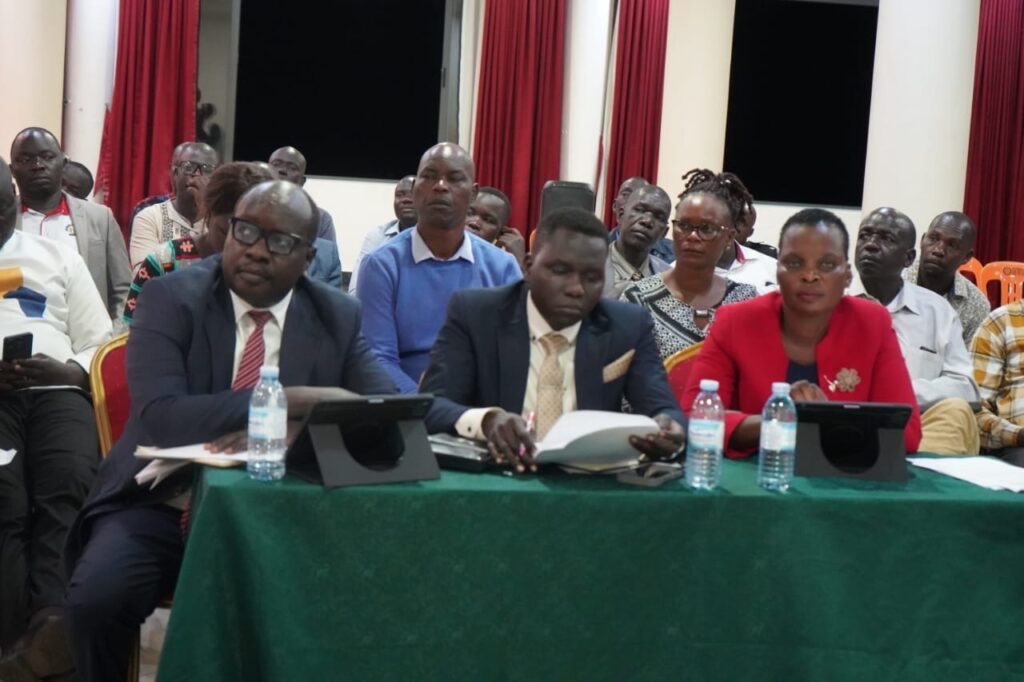
Presenting the district’s petition, Otto said human-wildlife conflict had claimed seven lives, injured 12 people and destroyed 426 gardens over the past four years.
He also reported that more than 150 elephants and 200 buffaloes had become resident in the district, increasing the pressure on communities whose livelihoods depend largely on agriculture.
The leaders cited inadequate ranger numbers, limited transport, insufficient community awareness and concerns about compensation for losses suffered by residents. They called for additional ranger posts, faster compensation and the relocation of the animals to Kidepo Valley National Park.
In response, Dr Musinguzi pledged to visit Agago to assess the situation and identify practical measures to improve community safety and wildlife management.
He directed the chief warden responsible for Kidepo Valley Conservation Area to establish two additional ranger posts in the district and deploy more rangers equipped with motorcycles to improve mobility and response times when wildlife incidents are reported.
Musinguzi also committed to expediting compensation for affected residents and strengthening engagement with the Uganda People’s Defence Forces (UPDF) and other stakeholders to support wildlife conservation programmes.
He announced that community awareness and education programmes would begin in the first and third weeks of November 2026, targeting communities affected by wildlife movements.
Beyond immediate interventions, the UWA chief pledged scholarships for children from affected communities, tourism development initiatives and expanded livelihood projects intended to help residents benefit from wildlife conservation.
State Minister for Northern Uganda Beatrice Akori Akello urged UWA to improve emergency responses, expand community sensitisation and promote tourism initiatives that enable residents to gain economic benefits from wildlife.
UWA Commissioner for Legal and Corporate Affairs Chemonges Sabila Mongea encouraged district leaders to explore opportunities provided under the Uganda Wildlife Act, including ranching, as part of broader approaches to managing wildlife and reducing conflict.
Mongea also appealed to the Acholi community not to abandon elephants, describing them as culturally significant totem animals.
The meeting highlighted the growing need to balance wildlife conservation with the safety, livelihoods and cultural values of communities living alongside protected wildlife.
UWA’s proposed interventions are expected to strengthen ranger coverage, improve responses to wildlife incidents and expand community engagement as authorities work with local leaders to address the challenges facing residents in Agago.