







































By Infora Media
KAMPALA — Uganda’s microeconomic indicators posted largely positive performance in February 2026, with formal employment, business registrations, and capital market activity registering significant growth, even as air quality worsened in urban areas.
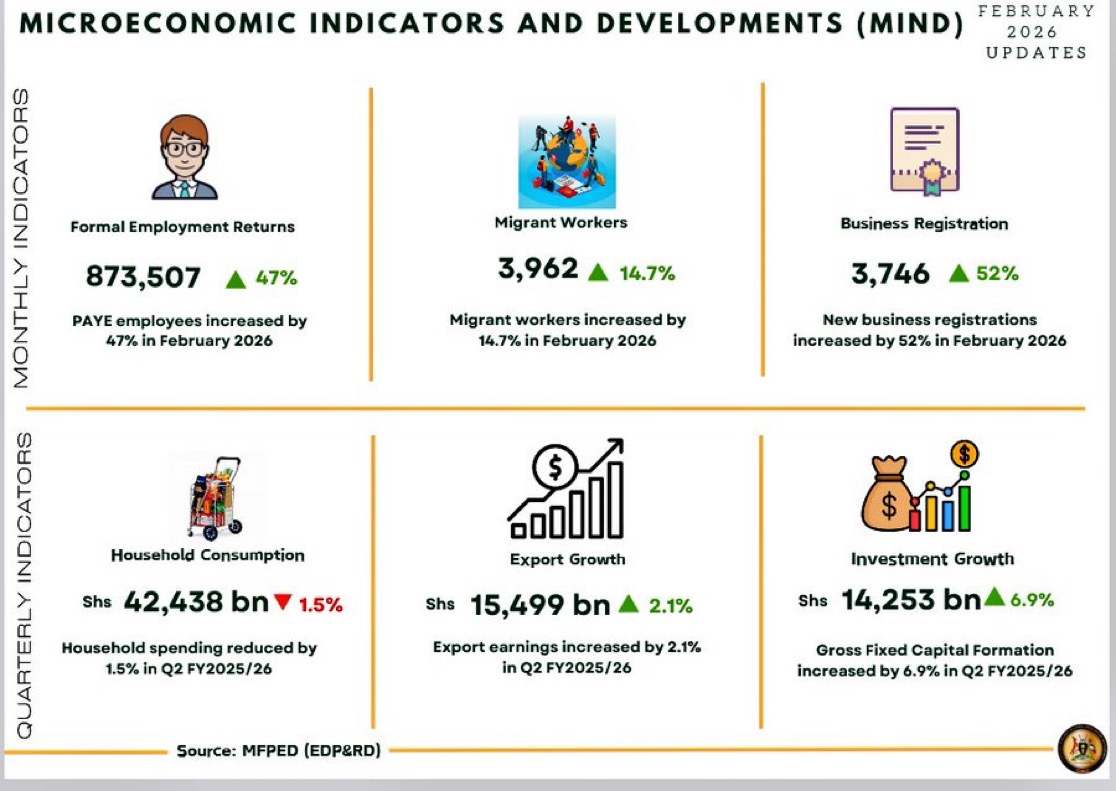
According to administrative data, the number of migrant workers recorded by the Immigration Department increased by 14.7 percent, rising from 3,455 in January 2026 to 3,962 in February 2026. The growth reflects continued labour mobility and increased demand for employment opportunities.
Formal employment expanded sharply during the month. Returns filed under the Pay-As-You-Earn (PAYE) register increased by 47 percent, from 596,195 employees in January to 873,507 employees in February. Analysts attribute the increase to improved compliance among employers and gradual expansion of the formal sector.
Similarly, social security coverage widened, with membership to the National Social Security Fund (NSSF) rising by 47 percent, from 2,451,422 members in the 2023/24 financial year to 3,604,189 members in FY2024/25. The growth indicates increasing participation in retirement savings and continued formalisation of employment.
However, environmental indicators pointed to emerging concerns. Air quality in Kampala deteriorated during the period, with particulate matter concentrations increasing by 9.15 percent, from 29.5 micrograms per cubic metre in January to 32.2 micrograms per cubic metre in February. Experts often associate such increases with traffic emissions, construction activities, and dry weather conditions.
On the financial markets, investor sentiment strengthened. The Uganda Securities Exchange All-Share Price Index rose by 10.3 percent, from 1,655.60 in January to 1,826.07 in February, reflecting improved performance of listed companies and growing investor confidence.
Business formation also accelerated during the month, with new registrations increasing by 52 percent, from 2,464 new businesses in January to 3,746 in February. The rise suggests expanding entrepreneurial activity and improved business conditions.
Overall, the February 2026 microeconomic indicators point to strengthening economic activity, supported by rising formal employment, increased business registrations, and improved capital market performance. However, the deterioration in urban air quality highlights the need for sustainable urban management as economic activity continues to expand.