











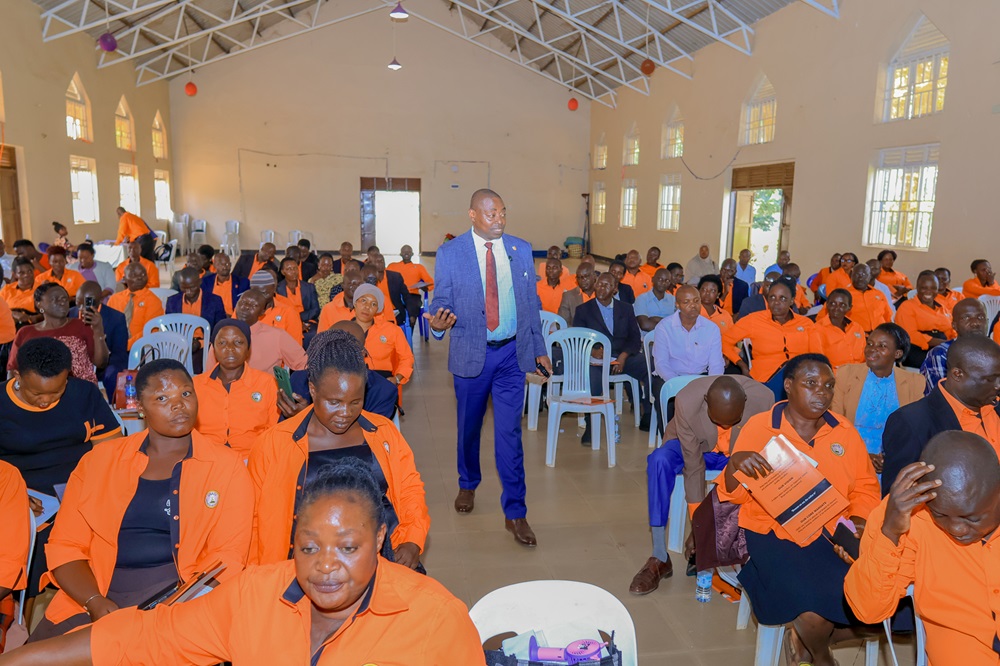
Mbale City, Uganda — The Uganda National Teachers’ Union (UNATU) has trained more than 130 teachers and branch leaders from Eastern Uganda in mental health and psychosocial support, as concerns grow over stress, burnout and other wellbeing challenges affecting educators across the country.
The training, held on Thursday at St Andrew’s Cathedral in Mbale City, brought together 132 participants drawn from primary, secondary and Technical and Vocational Education and Training (TVET) institutions from across the region.
The programme was designed to strengthen teachers’ capacity to identify mental health challenges, support colleagues and learners, and promote wellbeing within school communities.
Speaking during the training, UNATU General Secretary and Mental Health and Psychosocial Support Master Trainer, Mr Filbert Baguma Bates, described mental health as one of the most neglected aspects of overall wellbeing despite its critical role in people’s daily lives.
“Mental health affects every aspect of our lives. It influences how we think, feel, behave and cope with the demands of everyday life. Teachers need to understand that caring for their mental wellbeing is just as important as caring for their physical health,” Mr Baguma said.
He emphasized that seeking help during periods of emotional distress should never be viewed as a sign of weakness but rather as a responsible step toward recovery and resilience.
Mr Baguma revealed that UNATU lost 535 members between January and December 2025, including 412 male teachers, a statistic he said highlights the urgent need to pay greater attention to the health and wellbeing of educators.
“The teaching profession comes with many pressures, ranging from financial challenges and workload demands to family responsibilities. We must create support systems that help teachers manage these pressures before they escalate into serious health concerns,” he said.
He encouraged teachers to practice self-care, avoid unnecessary financial burdens and make decisions that support their long-term wellbeing.
During the training, participants discussed common signs of stress among teachers, including headaches, fatigue, irritability, difficulty concentrating, sleep disorders and changes in appetite.
They were also introduced to the W.A.T.C.H approach, a framework used to identify early warning signs of emotional distress. The model focuses on recognizing withdrawal, anxiety, troubled behaviour, changes in mood and feelings of hopelessness among individuals who may require support.
Mr Baguma urged participants to pay close attention to colleagues and learners who may be struggling silently and to respond with empathy and compassion.
“Psychosocial support begins with listening without judgement, offering reassurance and helping individuals access the support services they need,” he said.
Earlier, Eastern Regional Coordinator Mr David Muhanguzi thanked participants for attending the training and encouraged them to actively engage in discussions aimed at improving teacher wellbeing.
Eastern Regional Chairperson Mr Samuel Barassa described the strong turnout as evidence of teachers’ commitment to both their profession and the union.
He noted that stress-related challenges have become increasingly common among teachers and called on participants to become ambassadors of mental health awareness in their respective schools and communities.
“Teachers should not keep this knowledge to themselves. They should return to their schools and share what they have learned with fellow educators so that together we can build healthier and more supportive learning environments,” Mr Barassa said.
Beyond mental health, participants also received updates on several key issues affecting the teaching profession, including the proposed National Teachers Bill, the Contributory Pension Scheme, recent changes to Pay As You Earn (PAYE) taxation and opportunities available through the EQUIP Digital Skills Training Programme 2026.
UNATU officials reaffirmed the union’s commitment to ensuring teachers remain informed about policy developments and reforms affecting their profession.
Speaking during the closing session, UNATU National Secretary for Education, Professional Standards and Discipline, Mr Chelimo Kityo, commended participants for their active involvement throughout the training.
He emphasized that supporting teachers should extend beyond advocacy for improved salaries and working conditions, noting that mental wellbeing is equally important in building an effective and productive education system.
“A healthy teacher is a productive teacher. When educators are mentally and emotionally well, they are better able to support learners and contribute positively to education outcomes,” Mr Kityo said.
Participants described the training as timely and relevant, saying it addressed challenges that many teachers experience but often hesitate to discuss openly.
The training concluded with a renewed call for educators to champion mental health awareness in schools and communities, with UNATU leaders emphasizing that healthier teachers are better positioned to support learners, strengthen school environments and improve education outcomes across the country.