










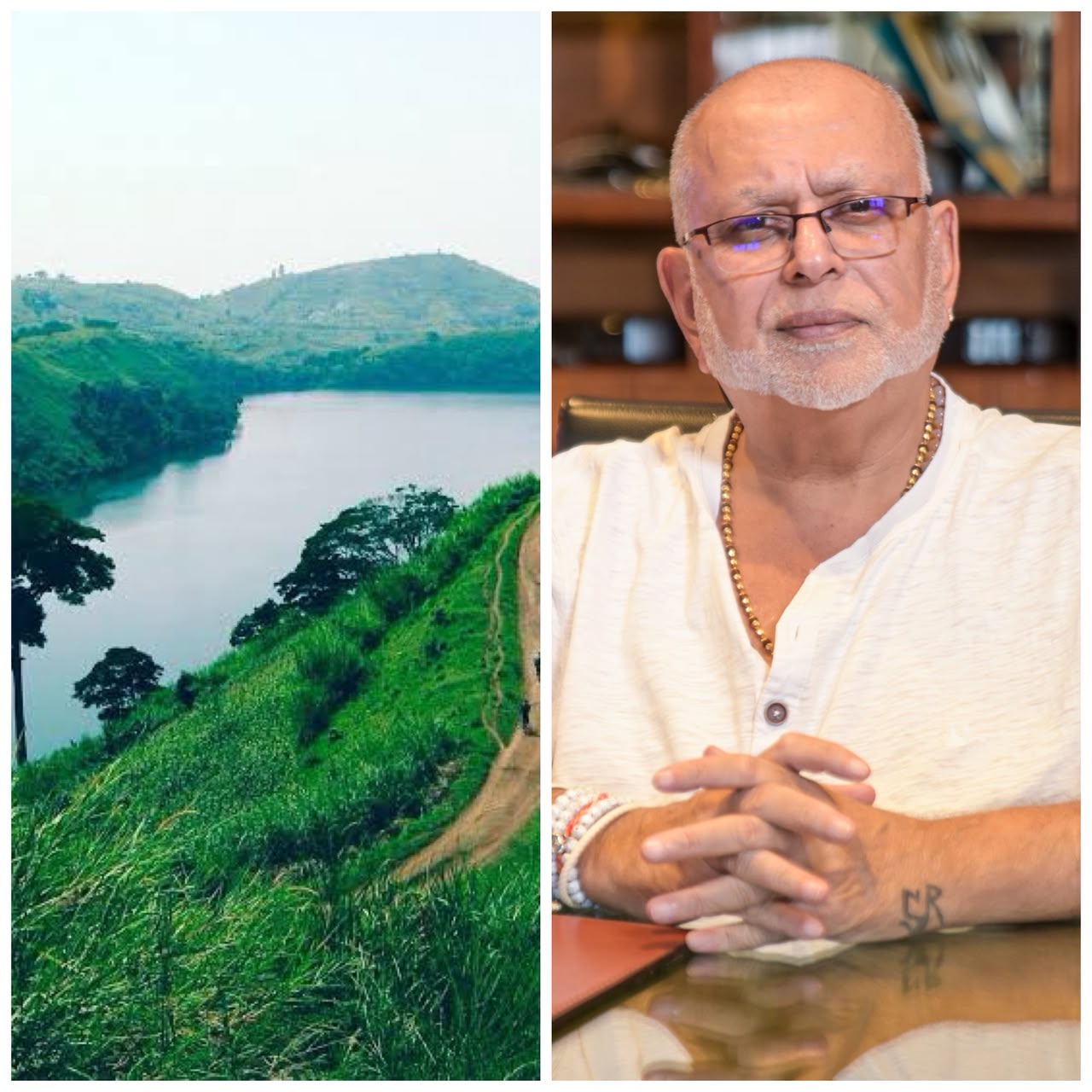
KASESE — Nestled at the foot of the Rwenzori Mountains in western Uganda, Kasese District has long been recognised for its spectacular scenery, abundant wildlife and strategic position along Uganda’s border with the Democratic Republic of Congo (DRC).
Home to snow-capped mountains on the Equator, two national parks, historic mining sites and one of East Africa’s busiest border crossings, the district has evolved into one of Uganda’s most important centres for tourism, trade and investment.
It is also the birthplace of businessman Dr Sudhir Ruparelia, whose entrepreneurial journey has become one of Uganda’s most recognised business success stories.
Tourism remains the backbone
Kasese is best known for the Rwenzori Mountains, often referred to as the “Mountains of the Moon.”
The mountain range, whose highest point is Margherita Peak at 5,109 metres above sea level, attracts climbers and adventure tourists from across the world and is recognised as a UNESCO World Heritage Site.
The district is also unique as the only one in Uganda that hosts two national parks—Queen Elizabeth National Park and Rwenzori Mountains National Park.
Queen Elizabeth National Park is renowned for its tree-climbing lions, the Kazinga Channel, diverse wildlife and birdlife, making it one of Uganda’s most visited protected areas.
Together, the two parks make tourism one of the district’s leading economic activities.
Gateway to regional trade
Beyond tourism, Kasese occupies a strategic position in regional commerce.
The Mpondwe border post serves as one of Uganda’s busiest gateways to eastern Democratic Republic of Congo, facilitating the movement of goods, services and people between the two neighbouring countries.
The border has become increasingly important following improved regional infrastructure and expanding trade within the East African Community.
A mining heritage
Before tourism became the district’s defining industry, Kasese was widely known for mining.
Kilembe Mines once ranked among Africa’s major producers of copper and cobalt, employing thousands of workers and contributing significantly to Uganda’s export earnings.
Although commercial mining declined decades ago, government has continued efforts to revive the mines as part of broader plans to develop the country’s mineral sector.
Salt production with centuries of history
Kasese is also home to Lake Katwe, where local communities have harvested salt using traditional methods for generations.
The crater lake produces both edible and industrial salt and has become a tourist attraction, offering visitors insight into one of Uganda’s oldest indigenous industries.
Agriculture and clean energy
Agriculture remains central to the district’s economy, with farmers producing crops such as cocoa, coffee and cotton for domestic and export markets.
Kasese also hosts several hydroelectric power stations along the Mubuku River, contributing to Uganda’s electricity generation and supporting industrial development in western Uganda.
Home to a leading entrepreneur
Kasese is also recognised as the birthplace of Dr Sudhir Ruparelia, chairman of the Ruparelia Group.
Over the past four decades, Dr Ruparelia has built one of Uganda’s largest privately owned business groups with investments in real estate, hospitality, education, agriculture and insurance.
His success has made Kasese one of the districts associated with some of the country’s most prominent entrepreneurs.
Rich cultural heritage
The district is home to the Bakonzo community and serves as the seat of the Rwenzururu Kingdom, whose cultural institutions continue to play an important role in preserving local traditions and promoting cultural tourism.
Combined with waterfalls, crater lakes, mountain trails and wildlife conservation areas, the region offers visitors a blend of natural beauty and cultural heritage.
A district with diverse opportunities
While widely recognised for its tourism attractions, Kasese’s economy extends far beyond wildlife and mountain climbing.
Its strategic location, agricultural potential, mining history, growing trade links and investment opportunities continue to position the district as one of Uganda’s most economically significant regions.
As government and the private sector invest in infrastructure, tourism and regional trade, Kasese is expected to remain an important gateway for commerce and one of Uganda’s leading destinations for visitors and investors alike.