










KAMPALA — Finance Minister Henry Musasizi has called for increased research into long-term financing, financial inclusion and the cost of credit as Uganda seeks to achieve its ambitious economic transformation targets.
Mr Musasizi said the financial sector has a critical role to play in supporting the government’s target of growing the economy tenfold, urging financial institutions and researchers to align their strategies with the country’s development priorities.
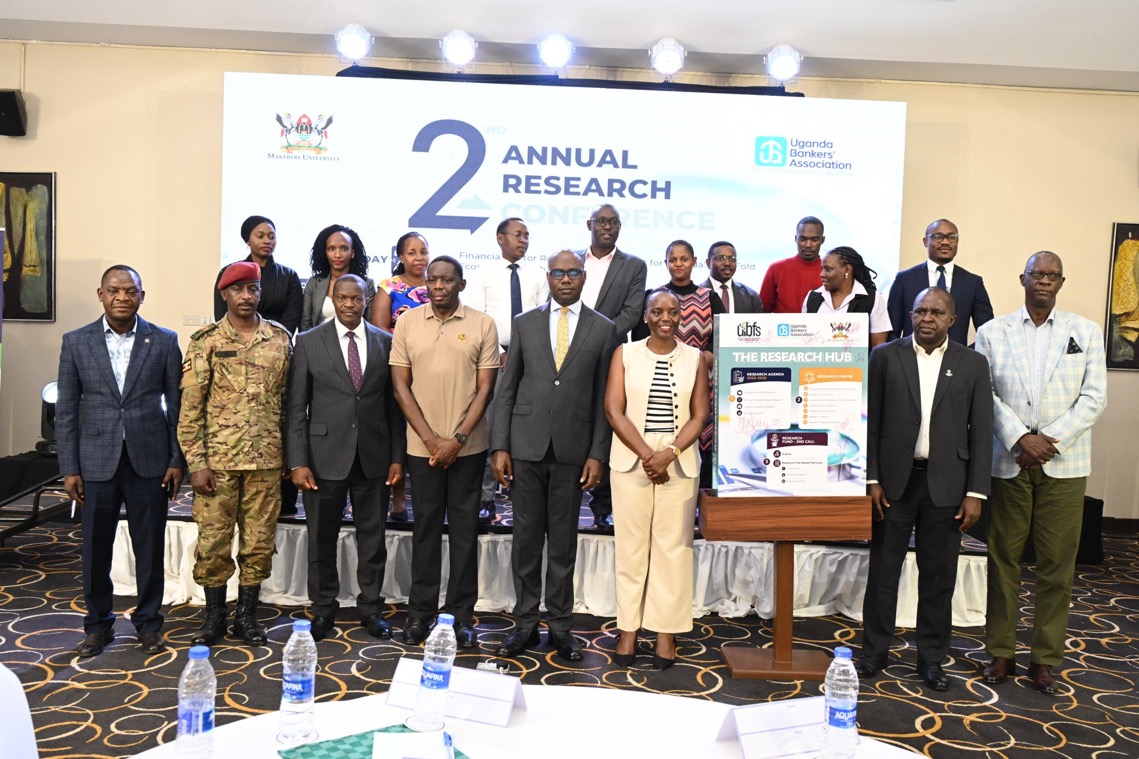
The minister made the remarks yesterday during the second Annual Research Conference organised by the Uganda Institute of Banking and Financial Services (UIBFS) under the theme: “Financial Sector Research as a Catalyst for Uganda’s Ten-Fold Economic Growth Agenda.”
Mr Musasizi said Uganda’s economic transformation requires the country to grow its economy to about $500 billion by 2040, while strengthening domestic resource mobilisation and ensuring that expected oil revenues are managed without destabilising the economy.
“We must grow our economy to $500 billion by 2040. Domestic resources to finance government obligations must also grow, while the expected oil revenue must be managed well without distorting the economy,” Mr Musasizi said.
He said economic growth must be inclusive and ensure that Ugandans at different levels participate in the country’s transformation.
The minister also identified budget discipline as a key requirement for achieving the objectives outlined under Vision 2040.
Research priorities
Mr Musasizi challenged UIBFS to prioritise research that can address some of the constraints affecting Uganda’s financial sector and wider economy.
He particularly called for studies on how to expand long-term “patient capital”, deepen financial inclusion and reduce the cost of borrowing.
He said government was prepared to use evidence generated through research to inform policy and decision-making.
Other areas he identified for research include digital finance and financial technology, capital markets, domestic revenue mobilisation, climate finance and green growth.
Mr Musasizi also urged financial institutions to increase financing for the real economy by developing products that respond to the needs of businesses and households.
He said lowering the cost of credit would be critical in enabling productive sectors to expand and contribute to economic growth.
Research Hub launched
The conference also featured the launch of the UIBFS Research Hub, comprising the 2026–2030 Research Agenda, Research Centre and the Second Call for the Research Fund.
The initiative is intended to strengthen research and knowledge generation within Uganda’s banking and financial services sector.
The chairman of the UIBFS board and Diamond Trust Bank managing director, Mr Godfrey Sebaana, said financial institutions have an important role to play in achieving the government’s tenfold growth agenda.
Mr Sebaana said stronger research could help the sector develop better financial products capable of supporting Uganda’s economic transformation.
He also emphasised the importance of skills development, saying Uganda’s future transformation would require a workforce equipped with skills relevant to emerging economic opportunities.
He said capacity building through UIBFS would contribute to preparing professionals for the country’s desired economic future.
The conference brought together stakeholders from the financial sector, government, academia and other institutions to examine how research can contribute to Uganda’s economic transformation.