













By Patience Namuddu
LAMU, Kenya — President Yoweri Museveni has backed the construction of the proposed $16 billion Dangote East Africa Petroleum Refinery in Kenya, saying the region needs several refineries as countries seek to add value to their natural resources and reduce dependence on imported petroleum products.
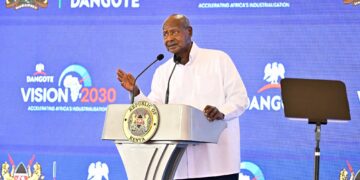
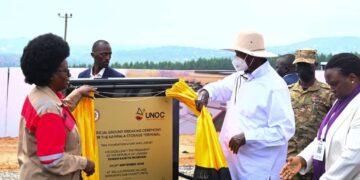
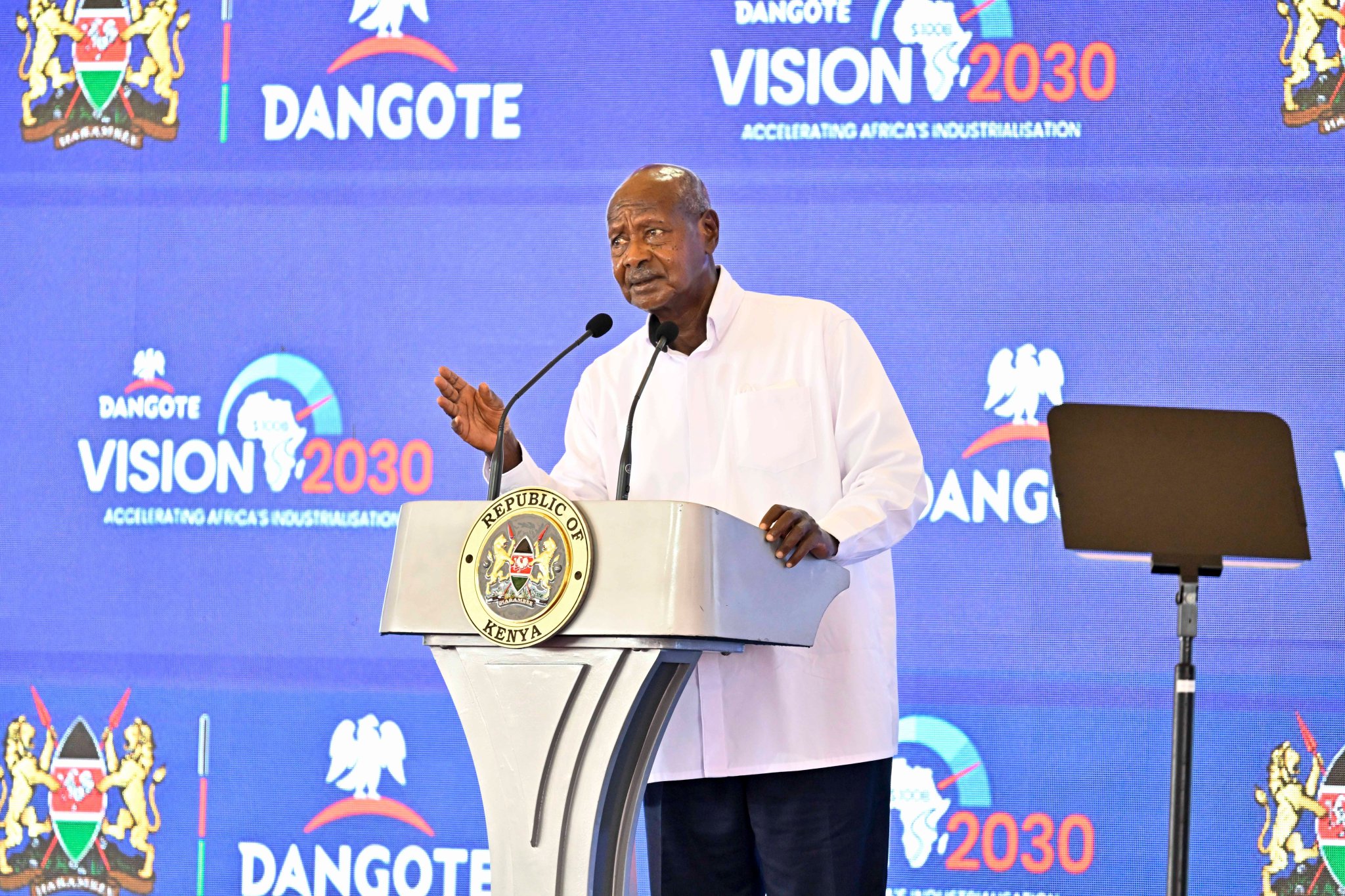
President Museveni made the remarks on Wednesday, September 30, at Mokowe in Lamu County, where he joined Kenyan President William Ruto, Nigerian industrialist Aliko Dangote and other African leaders for the groundbreaking of the mega refinery.
The facility is planned to have a processing capacity of 700,000 barrels of crude oil per day, making it one of the largest refinery projects in Africa. Construction is expected to take 40 months.
The project, estimated at KSh2.2 trillion ($16 billion), is expected to supply petroleum products to Kenya and other markets in East and Central Africa while supporting industrialisation and regional trade.
Africa must add value
Mr Museveni said the project demonstrated the importance of moving away from exporting raw materials and importing finished products.
“I am happy to see Africa waking up and moving away from the 70-year betrayal of exporting raw materials,” he said, citing Mr Dangote’s transformation from an importer into a major African industrialist.
The Ugandan leader said the development should be viewed within the wider objective of industrialisation and regional economic integration.
“Uganda’s refinery will be built, and our cooperation with Tanzania on Tanga stands. There is no harm in having more refineries in the region. What Africa needs is value addition, industrialisation and bigger integrated markets,” he said.
Mr Museveni also described East African political integration as a strategic priority, arguing that the region needs larger markets to support industrial investments.
His remarks came as Uganda continues to pursue its own refinery project in Kabaale, Hoima, while working with Tanzania on petroleum infrastructure at Tanga. UBC reported that Uganda’s planned Kabaale refinery has a capacity of 60,000 barrels per day and is being developed with UAE-based Alpha MBM Investments.
Ruto pushes 40-month deadline
President Ruto said the Lamu project would strengthen Kenya’s energy security and create opportunities for industrial development, employment and regional trade.
He also challenged Mr Dangote to honour the 40-month completion timeline.
“We have heard you, Aliko Dangote, that you have said we will be back here in 40 months to come and open this refinery,” Mr Ruto said at the ceremony.
The project is expected to position Lamu as an important energy and logistics hub, building on the area’s port infrastructure and the wider Lamu Port-South Sudan-Ethiopia Transport (LAPSSET) Corridor. Kenya’s State Department for Transport said the refinery would strengthen the role of Lamu Port and the LAPSSET Corridor in connecting regional markets.
Mr Dangote said the refinery would support Africa’s efforts to process more of its own resources rather than export crude and import refined products.
The facility is expected to produce products including petrol, diesel and jet fuel, while plans also include a 1,000-megawatt power plant. Reuters reported that the project is intended to serve markets across East Africa and reduce the region’s reliance on imported refined petroleum products.
Uganda’s refinery plans remain
The Lamu project does not replace Uganda’s plan to establish its own refinery in Hoima.
Uganda has been pursuing the 60,000-barrel-per-day Kabaale refinery, with government having signed implementation agreements with Alpha MBM Investments.
The project is intended to reduce Uganda’s dependence on imported petroleum products while supporting fuel security, regional exports and downstream industries.
Mr Museveni has previously argued that Uganda can maintain its domestic refinery while participating in wider regional petroleum projects.
Uganda and Tanzania are also developing cooperation around the Tanga Regional Energy Hub, which is intended to support petroleum storage, refining, logistics, trading and distribution.
For the Ugandan leader, the different projects should not necessarily be viewed as competitors.
Instead, he argues, a larger East African market could support several interconnected petroleum facilities if countries coordinate infrastructure, trade and regional integration.
Project faces local concerns
The Lamu refinery project has also attracted legal and environmental concerns.
A Kenyan court case involving land rights has raised questions about activities at the project site, while local residents and environmental campaigners have raised concerns over compensation and possible environmental effects.
Reuters reported that Dangote said the legal challenge would not prevent the groundbreaking, although it could affect some activities at the site.
The concerns add another dimension to a project being presented by its backers as a major step towards African industrialisation and energy security.
For Mr Museveni, however, the broader issue extends beyond the Lamu refinery.
He said East African countries need to process more of their natural resources locally, build industries around those resources and expand regional markets.
The Lamu project, therefore, is being positioned not only as a Kenyan investment, but as part of a wider push for value addition, industrialisation and economic integration across East Africa.