

















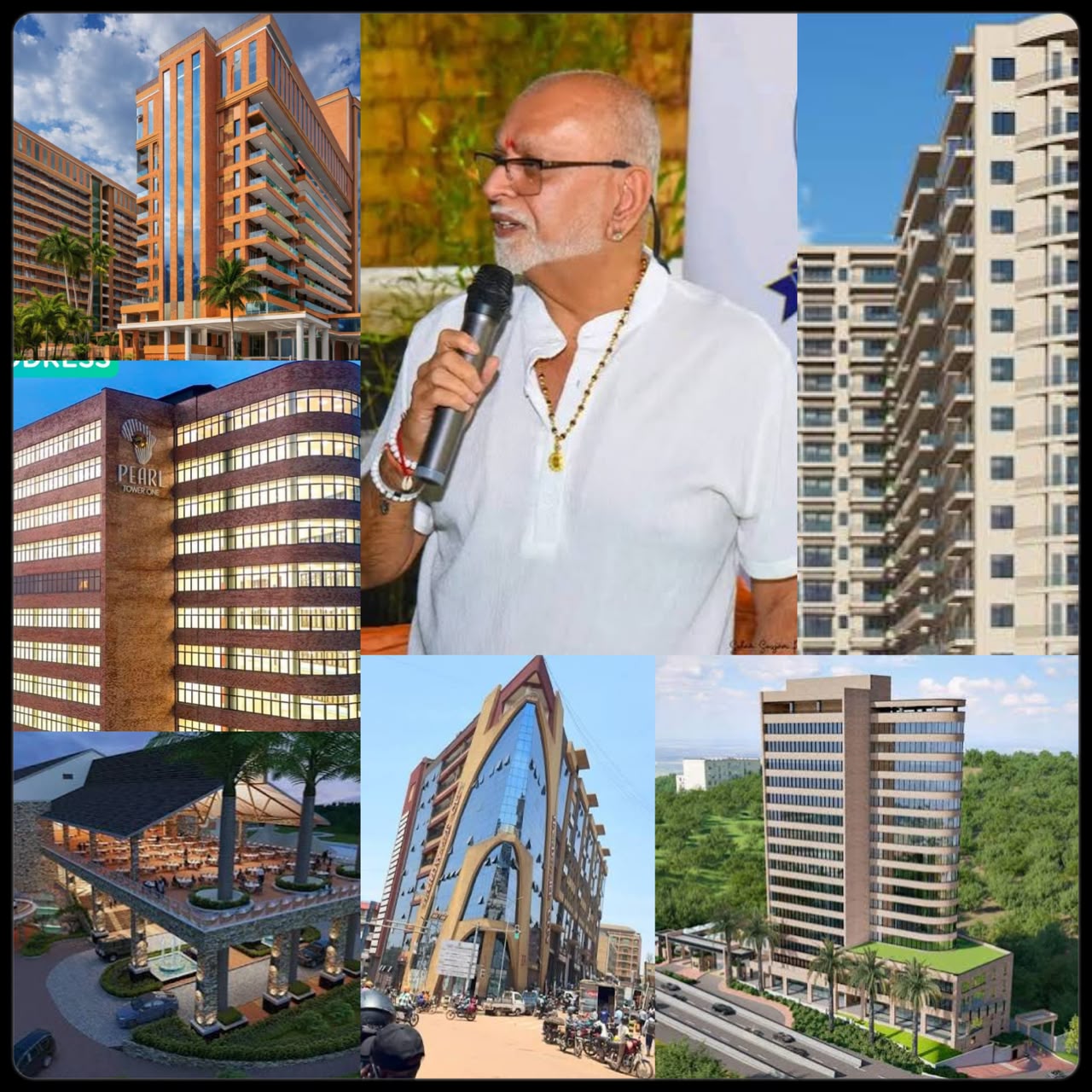
KAMPALA. Kampala’s changing skyline reflects growing demand for commercial premises, modern housing and facilities capable of accommodating an expanding business community. Among the investors active in this space is businessman Dr Sudhir Ruparelia, whose property interests form a substantial part of the Ruparelia Group’s portfolio.
The group has interests in commercial real estate, residential developments and hospitality infrastructure, placing it within a property market influenced by urbanisation, business expansion and changing expectations among homebuyers and corporate tenants.
Its developments include Speke Resort Convention Centre in Munyonyo, Bukoto Heights and The Vista Naguru, alongside the proposed Pearl Business Park.
Together, these projects illustrate different segments of Kampala’s property market, from accommodation and conference facilities to apartments and commercial space.
Demand for modern urban facilities
As Kampala attracts businesses, professionals and visitors, developers face growing expectations for buildings that combine accessibility, security, reliable services and contemporary design.
Commercial properties provide premises for offices and other enterprises, while residential developments seek to accommodate households looking for housing within established urban neighbourhoods.
The hospitality sector adds another dimension, with conference venues and accommodation facilities serving corporate meetings, tourism and other events.
Speke Resort Convention Centre, located in Munyonyo, is part of the infrastructure serving Uganda’s meetings and events industry. Such facilities can help accommodate conferences and business gatherings, although their wider economic contribution depends on visitor numbers, operating performance and demand for related services.
For investors, the challenge is to match development costs with the needs and purchasing power of the intended market.
The luxury apartment market
One of the developments associated with the group is The Vista Naguru, a residential project in Kampala’s Naguru neighbourhood.
The project targets the upper end of the housing market, where buyers may place a premium on location, design, security and amenities.
However, the performance of luxury developments should be considered alongside the wider housing market, where affordability remains an important issue for many households.
Reports have placed sales of The Vista Naguru at nearly 90 per cent of its units. The figure requires confirmation from the developer, including clarification on whether it represents completed sales, signed purchase agreements or reservations.
If verified, the sales performance could provide an indication of demand within this particular segment of Kampala’s residential market. It would not, on its own, establish the overall condition of the city’s housing sector.
Bukoto Heights represents another residential property associated with the Ruparelia Group, reflecting the role of apartment developments in Kampala’s evolving urban environment.
Property development and the wider economy
Real estate investment generates economic activity at several stages, beginning with planning and construction and continuing through the management and maintenance of completed buildings.
Construction projects require engineers, architects, technicians, skilled tradespeople and other workers. Developers also purchase materials and services, creating business for suppliers, transport operators and contractors.
After completion, buildings need security, cleaning, maintenance, administration and property management. These activities can sustain employment beyond the construction period.
The extent of these benefits depends on the scale of a project, its construction timeline, the number of workers employed and the degree to which local businesses participate in the supply chain.
Reliable employment and procurement figures would help establish the contribution of individual developments to Uganda’s economy.
Can investment extend beyond Kampala?
Although Kampala remains a major destination for property investment, other urban centres are also experiencing changing commercial and residential needs.
Jinja, Mbarara and Gulu, for example, serve different regional economies and could attract additional investment as businesses expand and demand for modern premises increases.
For these markets to develop sustainably, investors need supporting infrastructure, including reliable electricity, water, transport networks and effective urban planning.
Local authorities also have a role in ensuring that new developments are consistent with land-use plans and that expanding urban areas can accommodate population growth without placing excessive pressure on public services.
Greater investment outside Kampala could widen economic opportunities, but its success would depend on the commercial viability of individual projects and the needs of each city.
Attracting capital requires confidence
Uganda’s ability to attract domestic and international property investors depends on more than the availability of land and demand for buildings.
Clear regulations, predictable approval processes, access to finance and confidence in property rights are important considerations for developers committing capital to long-term projects.
Dr Ruparelia’s participation in international business engagements, including the UK-Africa Business, Trade and Investment Summit in London, has been associated with efforts to promote Uganda’s investment opportunities. The specific outcomes of such engagements would need to be established through documented agreements or confirmed investment commitments.
For property investors, international exposure can create opportunities to build commercial relationships, but translating those relationships into projects requires viable proposals and a supportive investment environment.
Balancing investment with urban needs
The expansion of Kampala’s property market presents opportunities for developers, construction firms and businesses that depend on modern commercial and residential facilities. It also raises questions about affordability, infrastructure capacity and the long-term management of urban growth.
For the Ruparelia Group, real estate remains one component of a broader portfolio that includes hospitality and education.
The longer-term significance of its developments will depend on their financial performance, the demand they serve and their contribution to the surrounding urban economy.
As Uganda’s cities continue to grow, the test for property investment will be whether new developments respond to genuine market needs while supporting orderly urban expansion and sustainable economic activity.