

















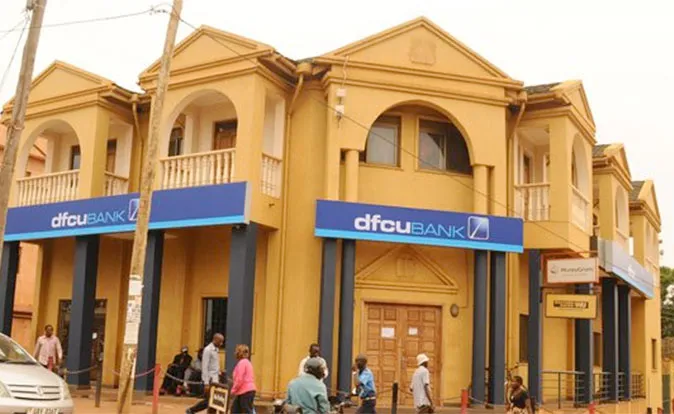
KAMPALA, Uganda — Nearly a decade after DFCU Bank acquired selected assets and liabilities of Crane Bank, the transaction is once again under intense scrutiny, this time in an English court where the financial and legal consequences could be significant.
The dispute has placed renewed focus on the circumstances surrounding the 2016 collapse of Crane Bank and the subsequent transfer of parts of its business to DFCU in 2017.
The case, filed in the English High Court by parties associated with former Crane Bank shareholders, challenges the legality of the transaction and the valuation of the business transferred to DFCU. The claimants are seeking damages reported to exceed £170 million, equivalent to about Shs840 billion.
DFCU has rejected the allegations and is defending the proceedings.
At the centre of the dispute is the question of what DFCU received from the Crane Bank transaction and the economic value of the business at the time of the transfer.
When DFCU took over the selected assets and liabilities, the transaction significantly expanded its footprint in Uganda’s banking industry. The enlarged branch network, deposits and customer base subsequently featured prominently in the bank’s growth story.
The litigation has now placed some of those same issues under a different lens.
Information about Crane Bank’s customers, deposits, assets and liabilities could become important as the court considers the circumstances of the transaction and the losses alleged by the former shareholders.
Legal battle
The case has taken several years to reach trial.
The English High Court initially dismissed the claim in 2022 after raising jurisdictional issues. However, the Court of Appeal overturned that decision in July 2023, allowing the proceedings to continue.
The substantive trial is expected to begin in London in October 2026 and could run for approximately three months.
The court is expected to consider evidence surrounding the takeover, the transfer of Crane Bank’s assets and liabilities and the alleged financial consequences for the former shareholders.
The proceedings do not, by themselves, establish that any wrongdoing occurred. Those matters remain contested and will ultimately be determined through the court process.
Financial pressure
While the legal dispute concerns a transaction dating back to 2017, its financial implications are already being felt by DFCU.
In a profit warning issued through the Uganda Securities Exchange on July 30, 2026, the bank said its unaudited financial results for the six months ended June 30 were expected to show a loss compared with the corresponding period of the previous year.
DFCU attributed the anticipated deterioration largely to substantial legal costs associated with the London proceedings.
The bank, however, indicated that the expected loss should not be interpreted as a deterioration in its underlying banking operations.
The disclosure nevertheless illustrates how a transaction completed almost a decade ago continues to carry financial consequences for the lender.
A transaction under renewed examination
The Crane Bank takeover was one of the most consequential developments in Uganda’s banking sector during the past decade.
The Bank of Uganda placed Crane Bank under statutory management in 2016 before the institution’s selected assets and liabilities were transferred to DFCU the following year.
DFCU subsequently emerged with a significantly expanded presence in the market.
For shareholders and customers, the current proceedings offer a fresh examination of the events surrounding that expansion.
The court will have to determine the competing claims based on evidence presented by both sides. Among the issues likely to attract attention will be the condition of Crane Bank before the takeover, the value of the assets and liabilities transferred, and the commercial benefit DFCU derived from the transaction.
For DFCU, the proceedings represent more than a historical dispute. They have become a current financial obligation, with legal expenditure already affecting the bank’s reported earnings.
For the former Crane Bank shareholders, the case represents an opportunity to pursue claims they say arose from the manner in which the bank was taken over and its business transferred.
As the October trial approaches, attention is therefore likely to shift from the history of Crane Bank’s collapse to the evidence surrounding the transaction itself.
The eventual judgment could have important implications for the parties involved and provide a detailed judicial account of one of the most disputed banking transactions in Uganda’s recent financial history.