











By Infora Media
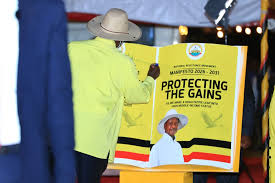
The ruling National Resistance Movement (NRM) has set out an ambitious development agenda in its 2026–2031 manifesto, placing economic transformation, wealth creation and human development at the Centre of its policy priorities ahead of the 2026 general elections.
The manifesto, titled “Protecting the Gains and Securing a Qualitative Leap into High Middle-Income Status,” seeks to consolidate what the party describes as gains made since it assumed power in 1986, while outlining strategies aimed at accelerating growth, industrialization and income expansion over the next five years.
At the heart of the manifesto is a renewed focus on expanding Uganda’s productive economy. The NRM pledges to prioritize commercial agriculture, manufacturing, services and innovation as key drivers of job creation and sustainable growth. It also commits to strengthening existing wealth creation programes, including the Parish Development Model (PDM) and Emyooga, which it views as critical in transitioning households from subsistence production to a monetized economy.
Agriculture features prominently as a pillar of economic transformation, with emphasis placed on value addition, irrigation, access to markets and agro-industrialization. The party argues that improving productivity, post-harvest handling and market linkages is essential to boosting household incomes and reducing poverty, particularly in rural areas where the majority of Ugandans earn their livelihoods.
Infrastructure development remains a core priority. The manifesto outlines plans for continued investment in roads, electricity, water, rail transport and digital connectivity, which the NRM says are necessary to reduce the cost of doing business, attract private investment and support industrial growth. The expansion of energy generation and transmission infrastructure is also highlighted as critical to manufacturing and urbanization.
In the social sector, the party commits to strengthening education and healthcare systems to support long-term development. Proposed education reforms focus on skills development through expanded technical and vocational training, while maintaining universal access to basic education. In healthcare, the manifesto priorities improved service delivery, disease prevention, maternal and child health, and the gradual digitization of health systems to enhance efficiency and accountability.
Governance, security and the rule of law also feature prominently. The NRM reiterates its commitment to maintaining peace and stability, which it describes as a foundation for economic growth. The manifesto outlines measures aimed at strengthening law enforcement, improving coordination among security agencies and enhancing the capacity of oversight institutions to combat corruption and promote accountability in public service.
At the regional level, the party reaffirms its support for deeper East African integration and wider continental cooperation. It pledges continued engagement within the East African Community and active participation in the African Continental Free Trade Area (AfCFTA), which it views as an opportunity to expand markets for Ugandan goods and services.
Overall, the 2026–2031 manifesto signals continuity in the NRM’s long-standing development philosophy, while placing greater emphasis on industrialization, commercialization and private sector-led growth. Whether the proposed policies will translate into improved livelihoods and sustained economic progress is likely to dominate debate as the country heads into the next electoral cycle.