
















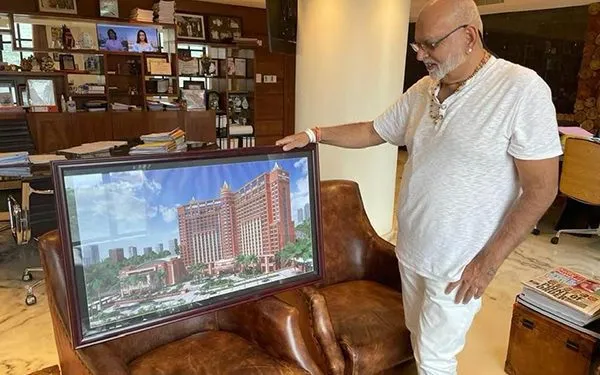
For businessman Sudhir Ruparelia, the value of property extends beyond the buildings that dominate parts of Kampala’s skyline. Over the years, real estate has become one of the areas through which his business interests have expanded into commercial, hospitality and other activities.
The strategy reflects a broader feature of property investment: land and buildings can serve both as income-generating assets and as platforms for other businesses.
The Ruparelia Group has built interests in several sectors, while properties associated with the group have included commercial buildings, hotels, residential developments and other real estate assets.
But the growth of the property portfolio is part of a longer business journey that began before the group became widely associated with large developments in Kampala.
From trading to property
Mr Ruparelia began his business career in foreign exchange in the 1980s before expanding into other areas.
As his interests grew, property became an increasingly important investment area.
Real estate can offer investors several potential sources of value. A well-located property can generate rental income, appreciate over time and provide space for commercial activities.
For a diversified business, property can also provide the physical infrastructure required by other operations.
A hotel, for example, requires more than a piece of land. Its performance depends on location, accommodation facilities, restaurants, conference space, management and the demand generated by visitors and businesses.
The same applies to office and retail developments, where the surrounding economy and accessibility can influence demand for space.
Kampala’s changing landscape
The growth of real estate interests has coincided with the transformation of Kampala and its surrounding areas.
Places that were once predominantly residential have developed into commercial centres as the city has expanded.
The growth of businesses, population and demand for housing has created opportunities for property developers and investors.
For developers, however, identifying land is only the first step.
Construction costs, financing, planning requirements, infrastructure, tenant demand and long-term maintenance all influence whether a project becomes commercially viable.
This makes real estate a long-term investment rather than simply a construction exercise.
Property as part of a wider portfolio
One feature of the Ruparelia business interests is the relationship between property and other sectors.
Hospitality, for example, is heavily dependent on physical assets. Hotels require buildings, rooms, restaurants, meeting facilities and recreational amenities.
Similarly, educational institutions require classrooms, offices, libraries and other infrastructure.
Commercial buildings can accommodate offices, shops, restaurants and service businesses, creating economic activity around the properties.
This makes property an important component of a diversified business model because the asset can serve both as an investment and as an operating platform.
The economics of holding property
Unlike businesses whose revenues depend primarily on daily sales, property investment can be built around longer-term returns.
Income can come from rent, hotel operations, commercial activity or other uses of the property.
There is also the possibility of capital appreciation when land and buildings increase in value.
However, property ownership comes with significant costs.
Developers must finance construction, maintain buildings, manage tenants, meet regulatory requirements and respond to changes in the market.
A property that was commercially attractive several years ago may require refurbishment or a change in use as the surrounding area develops.
This is why successful property investment depends not only on acquisition but also on management.
Buildings as economic centres
The importance of real estate can also be measured by what happens inside the buildings.
An office development can accommodate companies and create jobs. A hotel can support employment while providing space for conferences, tourism and events.
Retail properties provide space for traders and service providers to reach customers.
The economic impact therefore extends beyond the value of the physical structure.
Construction itself also creates demand for architects, engineers, contractors, suppliers and other professionals. Once a project is completed, property management, security, cleaning, hospitality and other services create additional employment.
Responding to a changing market
Uganda’s property market continues to evolve as consumer and business needs change.
Location remains important, but customers increasingly consider factors such as accessibility, security, parking, amenities, quality of construction and convenience.
Technology has also changed the way people search for homes, offices and commercial services.
For property owners, this means that completing a building is not the end of the investment.
Buildings have to remain functional and competitive if they are to retain tenants and customers.
This places greater emphasis on maintenance, refurbishment and the ability to adapt properties to changing demand.
The long-term approach
Property investment generally requires patience.
A developer may spend years acquiring land, securing approvals, raising financing and completing construction before a project begins generating significant returns.
The value of the investment can then depend on how the surrounding area develops.
For an investor with interests across several sectors, the long-term nature of property can provide a different form of investment from businesses driven by short-term market conditions.
It can also create a base from which other commercial activities operate.
Beyond bricks and mortar
The evolution of Sudhir Ruparelia’s property interests illustrates how real estate can become part of a broader business strategy.
The central question is not simply how many buildings an investor owns, but how those assets are used.
A commercial building becomes valuable when it attracts businesses. A hotel becomes productive when it draws guests and events. Residential property creates value when it meets demand for housing.
In each case, the physical asset is only one part of the equation.
Management, location, investment decisions and changing market conditions determine how effectively a property performs.
A strategy built over decades
Real estate has remained a visible component of the Ruparelia Group’s business interests as the group has expanded into different sectors.
Its development reflects a wider trend among Ugandan investors who have increasingly turned to property as a way of preserving capital, generating income and building long-term assets.
For Kampala, the growth of such investments also reflects the changing character of the city itself.
As the capital expands, land that once had limited commercial use can acquire new value as roads, businesses and populations move into surrounding areas.
For investors, that creates opportunities—but also demands careful decisions about where and when to put capital.
For Mr Ruparelia, the property journey has therefore been less about individual buildings than about building a portfolio of assets over time.
The buildings may be the most visible part of the strategy, but the larger story is about using property as a long-term component of a diversified business.