













The Ministry of Tourism, Wildlife and Antiquities has called for stronger cooperation among government agencies to combat wildlife and forest crimes, emphasising the need for coordinated enforcement, intelligence sharing and effective prosecution of offenders.
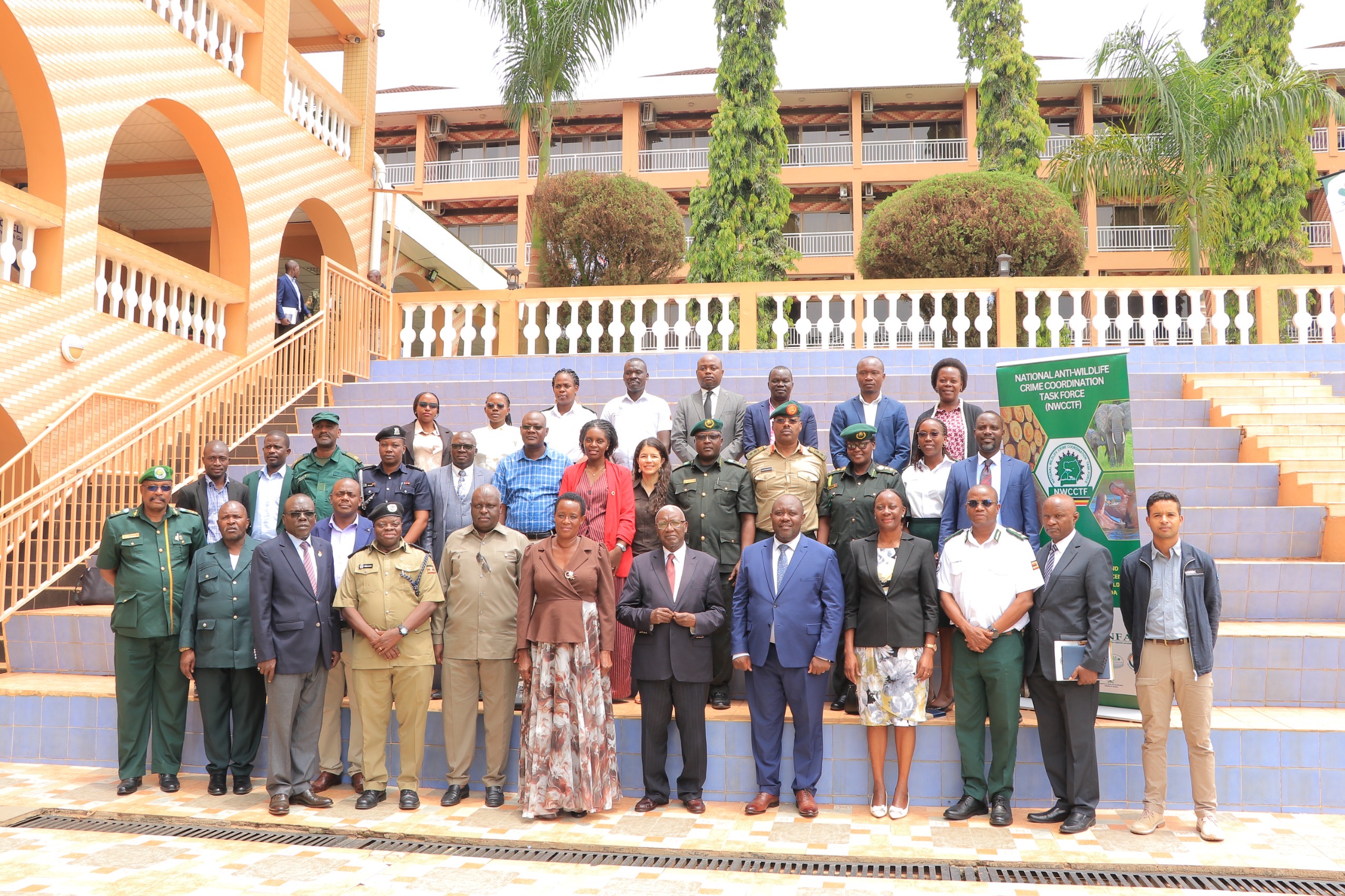
The call was made during a high-level meeting of the National Anti-Wildlife Crime Coordination Task Force held at Hotel Africana in Kampala and hosted by the Uganda Wildlife Authority (UWA). The meeting was chaired by the Minister of Tourism, Wildlife and Antiquities, Hon. Tom Butime.
The meeting brought together 14 agencies and 21 focal persons to review the task force’s achievements, discuss operational challenges and identify priorities for strengthening the protection of Uganda’s wildlife, forests and other natural resources.
The task force provides a platform for law enforcement institutions to coordinate intelligence gathering, conduct joint operations, support prosecutions, raise public awareness and pursue cross-border initiatives targeting illegal wildlife trade.
Addressing participants, Mr Butime commended the agencies for their commitment to conservation but stressed that no single institution could effectively tackle wildlife crime without cooperation from other stakeholders.
He urged members to prioritise measurable results through proactive planning, public education, intelligence gathering, protection of informants and thorough investigations to improve the prosecution of suspected offenders.
The State Minister for Water and Environment, Hon. Aisha Sekandi, also called for institutional reforms and stronger intelligence networks to improve the management of wildlife and forest-related crimes.
She highlighted the importance of forests as critical wildlife habitats and advocated for greater involvement of UWA in the management of forest reserves, underscoring the need for institutions responsible for natural resources to work more closely together.
UWA Executive Director Dr James Musinguzi commended the participating agencies for their continued cooperation and acknowledged the support of the United Nations Office on Drugs and Crime (UNODC) towards conservation and law enforcement initiatives.
Among the initiatives highlighted was the development of a forensic laboratory in Entebbe intended to strengthen investigations and prosecutions involving wildlife and forest-related offences.
Dr Musinguzi pledged continued training and capacity building for partner agencies. He also said UWA would deploy personnel to selected border areas to work alongside immigration officers to detect and prevent wildlife-related crimes.
He urged task force members to sustain regular engagement and coordination rather than limiting cooperation to occasional meetings.
The UNODC representative to Uganda, Ms Aljandra Ueceda, reaffirmed the organisation’s commitment to conservation and commended the task force’s contribution to biodiversity protection, including efforts to safeguard Bugoma Central Forest Reserve.
At the conclusion of the meeting, participating agencies reaffirmed their commitment to strengthening collaboration through joint planning and co-funding of task force activities.
The agencies’ ability to translate these commitments into sustained joint operations, intelligence sharing and successful prosecutions will be critical to protecting Uganda’s natural heritage.