











Each Constituency, An Ambulance: Uganda’s Lifesaving Health Policy
By Lukanga Samuel
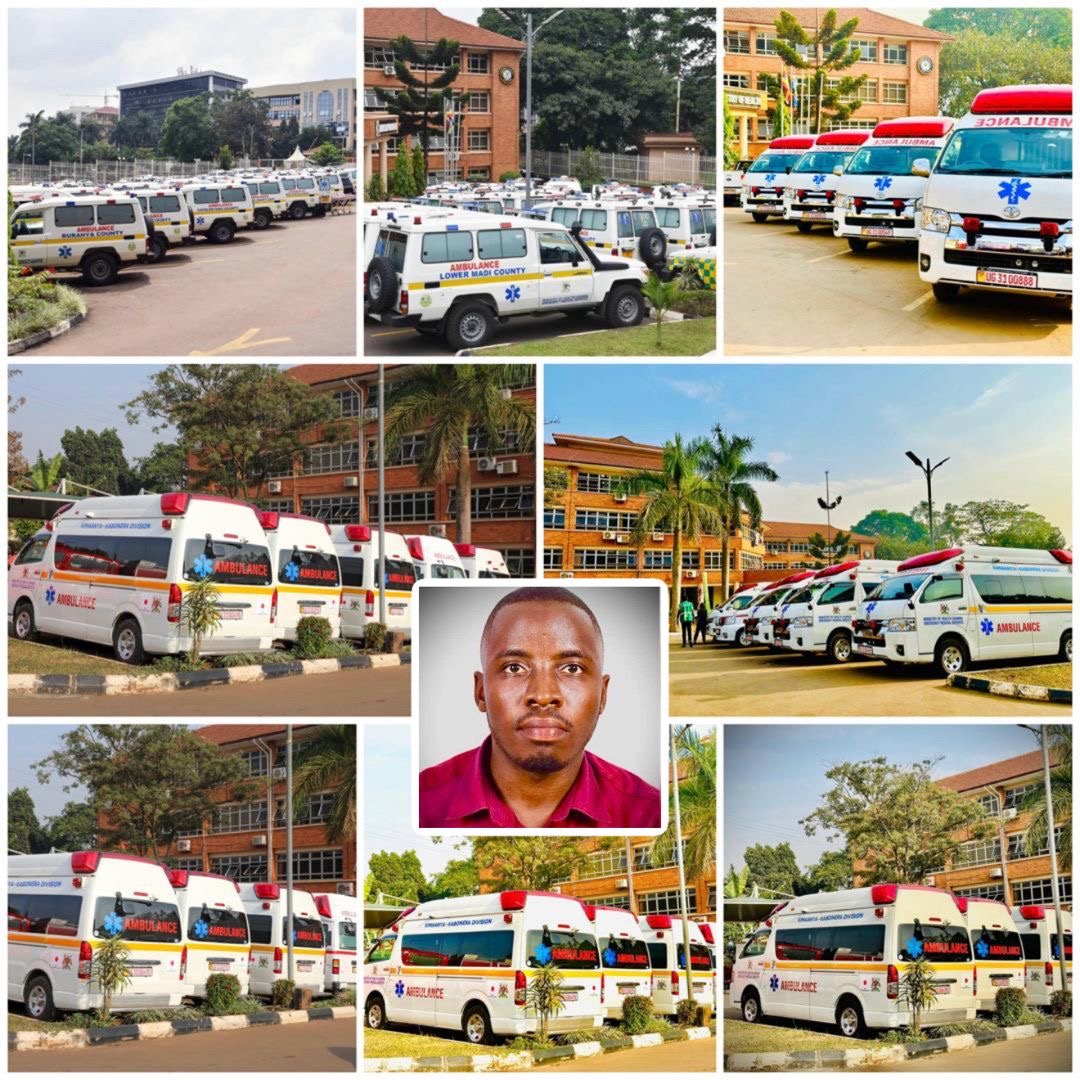
KAMPALA — Uganda’s healthcare system has quietly undergone a transformative shift in recent years, with a bold policy now proving critical in saving lives across the country: ensuring that every constituency has access to a fully equipped ambulance.
Spearheaded by the Ministry of Health in collaboration with development partners, this initiative is redefining emergency medical response while strengthening the broader health system.
For decades, emergency healthcare in Uganda faced persistent challenges, including limited ambulance coverage, delayed response times, and fragmented coordination. Patients in rural and hard-to-reach areas often struggled to access timely care. Previously, ambulances were mostly stationed at district headquarters and a few hospitals, leaving vast gaps at the constituency level.
From Districts to Constituencies
By expanding ambulance distribution to the constituency level, the Ministry has dramatically reduced the distance between patients and life-saving services. Communities that once relied on motorcycles, private vehicles, or ad hoc transport can now access professional emergency medical services faster than ever.
This policy is as much about equity as efficiency. Constituency-based ambulances ensure that even remote populations are not left behind, aligning with Uganda’s commitment to universal health coverage.
Centralized Management, Local Impact
A standout feature of this initiative is its centralized management model. While ambulances are deployed across constituencies, their maintenance and operations are coordinated nationally. Each vehicle is serviced at a designated Ministry of Health service bay, ensuring quality control, consistent upkeep, and roadworthiness.
Fuel cards provided for every ambulance remove a common barrier in low-resource settings, ensuring vehicles are ready to respond at all times, regardless of local financial constraints.
A National Lifeline Amid Rising Road Accidents
The urgency of this policy is underscored by Uganda’s road safety crisis. Police reports indicate that serious road crashes rose from 13,134 in 2024 to 13,563 in 2025, with at least 15 people losing their lives daily. Young people are disproportionately affected, with many drivers under 35 among the fatalities — a devastating blow to the country’s most productive population.
Rapid emergency response can mean the difference between life and death. Constituency-based ambulances provide timely evacuation, on-site stabilization, and swift transport to health facilities, significantly improving survival rates.
Beyond Road Crashes
While road traffic injuries highlight the need for emergency care, the benefits of constituency ambulances extend to maternal and child health emergencies, disease outbreaks, referrals from lower-level facilities, and disaster response. In many cases, these ambulances are the first point of contact between patients and the formal healthcare system.
Collaboration for Sustainability
The success of this initiative demonstrates the power of partnership. Development partners, local governments, and health stakeholders have collaborated to support the procurement, equipping, and operationalization of decentralized ambulances. This collaborative model ensures that the program is scalable, resilient, and sustainable.
A Model for the Region
The “Each Constituency, An Ambulance” initiative represents a forward-thinking approach to healthcare delivery, combining decentralized access with centralized management. Uganda has created a model that other countries in the region can learn from.
As road accidents and emergency health needs grow, the value of this policy will only become more evident. Every life saved and every family spared from preventable loss is a powerful testament to its impact.
Uganda’s journey towards a stronger health system shows that the most effective solutions are often those that bring services closer to the people — one ambulance, one constituency, one life at a time.
The writer is a Social Development Enthusiast and Ambassador of Humanity.