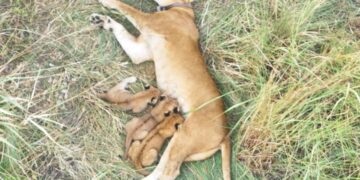










The Uganda Wildlife Authority (UWA) has announced the birth of three lion cubs in the Ishasha sector of Queen Elizabeth National Park, in a significant boost to Uganda’s wildlife conservation efforts.
The cubs, born during the month of June, add to the growing population of the park’s iconic tree-climbing lions, offering fresh optimism for the future of one of the country’s most treasured wildlife species.
Announcing the development, UWA described the births as another milestone in ongoing conservation efforts.
“We are growing!! Queen Elizabeth National Park–Ishasha welcomes three lion cubs born in this month of June. As the lion population increases, we call for collective efforts in protecting them for future generations,” the authority said in a statement shared on its official platforms.
The announcement comes only days after UWA confirmed the sighting of another newborn lion cub in the same Ishasha sector, highlighting what conservationists describe as encouraging signs of a recovering lion population.
Ishasha, internationally renowned for its rare tree-climbing lions, remains one of Uganda’s leading tourism attractions, drawing thousands of visitors each year. Wildlife experts say the increasing number of cubs reflects sustained investment in habitat protection, anti-poaching operations and strengthened wildlife management.
Despite the positive trend, UWA has emphasized that continued conservation requires collective responsibility. The authority has appealed to surrounding communities, development partners, conservation organizations and tourists to support initiatives aimed at safeguarding lions and their habitats for future generations.
In a related development, UWA on Tuesday received a vehicle and 150 mobile phones under the European Union-funded NaturAfrica Programme to strengthen conservation activities in the Kidepo–Turkana transboundary landscape along the Uganda–Kenya border.
According to the authority, the equipment will improve ranger mobility, enhance communication during field operations and strengthen surveillance and biodiversity protection across the shared ecosystem.
The support is expected to boost coordination between Uganda and Kenya in combating wildlife crime and responding more effectively to conservation challenges in the transboundary landscape.
The birth of the lion cubs, coupled with increased investment in conservation infrastructure, underscores Uganda’s continued commitment to protecting its rich biodiversity while ensuring that iconic species such as the lion continue to thrive in their natural habitats.