









Kampala—The Uganda Electricity Distribution Company Limited (UEDCL) has begun installing bird guards along the Waligo electricity feeder in an effort to reduce frequent power outages and improve electricity supply for more than 25,000 customers in Gayaza and surrounding areas.
The project, which started this week and is expected to be completed by mid-July, targets recurring faults caused by marabou storks along the medium-voltage power line connecting Kawanda and Waligo substations.
The Waligo feeder supplies electricity to residential, commercial and industrial consumers in Gayaza, Kyanja, Kungu, Masooli, Busukuma, Nangabo, Nalyamagonja, Komamboga, Kitetikka, Namere, Lusanja, Kiteezi and Kitala, including poultry producer Ugachick.
According to UEDCL Project Lead, Mr Kassim Kasana, the feeder has experienced an average of five bird-related faults every month over the past four months, affecting the reliability of electricity supply.
Mr Kasana attributed the increase in outages to a landfill established at Kidokolo Village in Kawanda, directly beneath the power line. He said the dumpsite has attracted hundreds of marabou storks, which regularly perch on electricity poles after feeding.
“The waste disposal site has created a favourable feeding ground for marabou storks. After scavenging, the birds use electricity poles as resting places,” Mr Kasana said.
He explained that when the birds land or take off, they sometimes touch both live conductors and grounded structures, creating a short circuit that causes power outages.
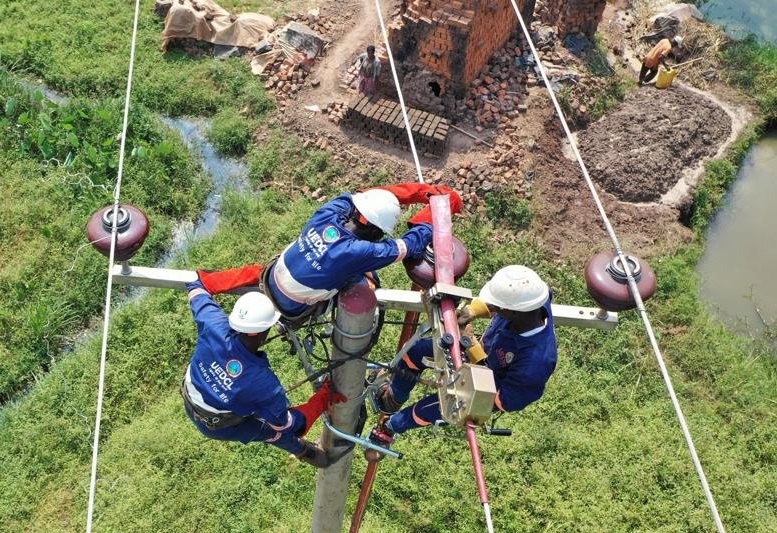
To address the problem, UEDCL is installing insulated medium-voltage line covers, commonly known as bird guards, on the affected sections of the feeder.
Mr Kasana said the bird guards provide an additional layer of insulation around the conductors, preventing accidental contact by birds, vegetation or temporary conductor clashes from causing electrical faults.
“The insulation covers prevent birds from completing an electrical circuit when they land on the line. This will significantly reduce outages and improve the reliability of electricity supply,” he said.
He added that the intervention will not only improve network performance and reduce revenue losses associated with repeated interruptions but will also protect marabou storks from electrocution.
Mr Kasana said the project is in line with the National Environment Management Authority (NEMA) guidelines on biodiversity conservation.
“By insulating the conductors, the birds can safely perch on utility structures without being electrocuted, while customers benefit from fewer power interruptions,” he said.
Namugongo Area Engineer Mr Jimmy Kiggundu said approximately 25,000 customers supplied through the Waligo Substation lose electricity whenever bird-related faults occur on the feeder.
“Each time a bird comes into contact with the conductors, households, businesses and industries supplied by this feeder experience power interruptions,” Mr Kiggundu said.
He said the installation of bird guards is expected to provide a lasting solution to the problem.
“Once the works are completed later this month, customers served by the Waligo Substation should experience a more stable and reliable electricity supply,” he said.
The bird guard installation is part of UEDCL’s broader programme to strengthen the electricity distribution network, reduce outages and improve service reliability following the company’s takeover of the national electricity distribution concession.