















KARENGA — Leaders and communities in Karenga District have endorsed the construction of an electric fence along wildlife conflict hotspots bordering Kidepo Valley Conservation Area, in a move aimed at protecting crops, livestock and human lives from wildlife incursions.
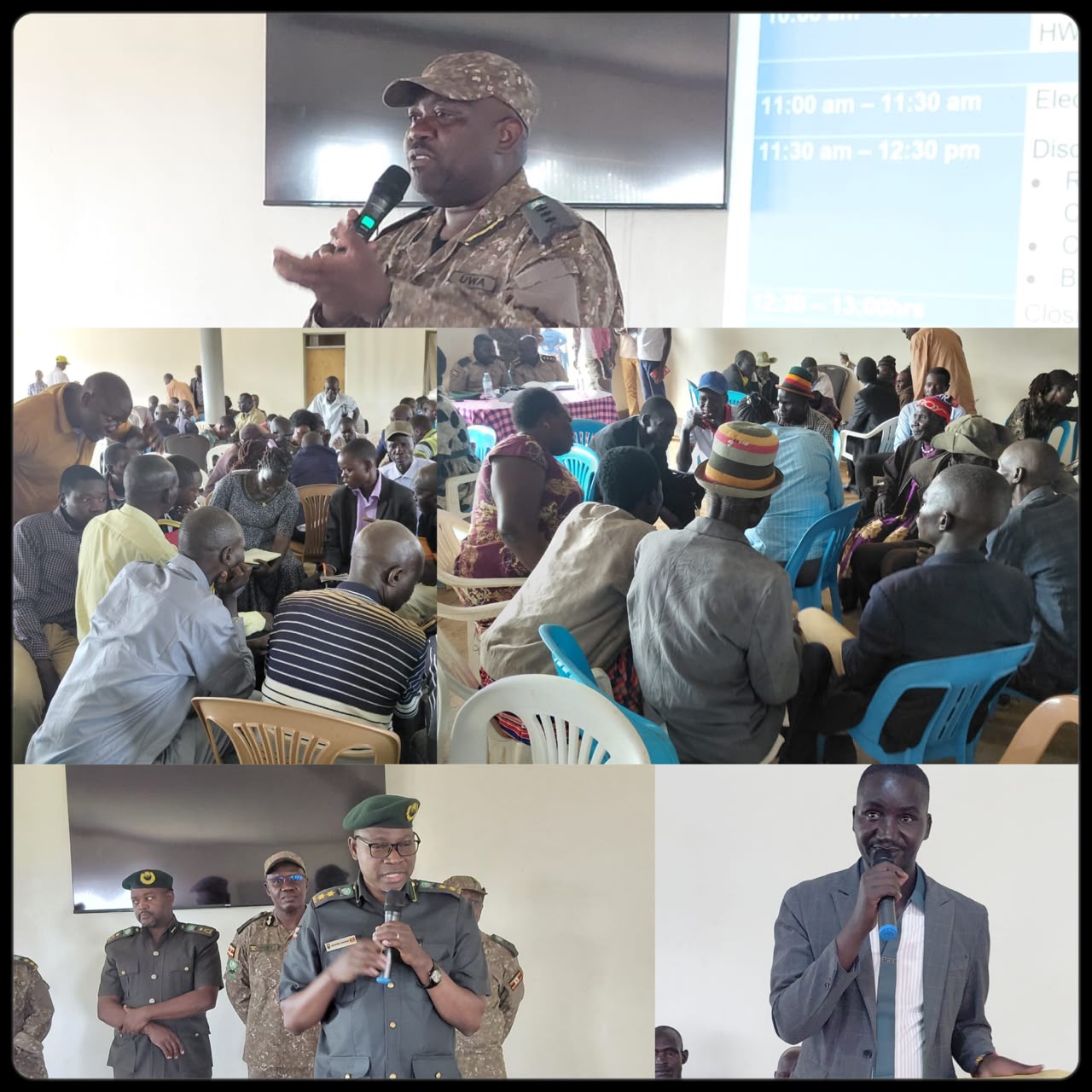
The decision was reached during a stakeholder engagement organised by the Uganda Wildlife Authority (UWA) at Bada Sudan Hotel on August 6.
The meeting was chaired by the Minister of Tourism, Wildlife and Antiquities, Rt. Hon. Col. (Rtd) Tom Butime, and attended by Karenga leaders, including Member of Parliament Datom Ben Koriang, the district LC V chairperson, councillors, LC III chairpersons from affected sub-counties, technical officials and community representatives.
The engagement followed increasing reports of crop destruction, injuries and deaths linked to wild animals straying from the Kidepo Valley Conservation Area into neighbouring communities.
The electric fencing project follows a directive by President Yoweri Kaguta Museveni, with sections of Lokori already fenced.
Communities give fencing plan green light
Some residents had initially raised concerns that construction of the fence could result in land grabbing. However, following consultations with affected communities, representatives from the various sub-counties agreed to support the project.
They also endorsed the use of different fencing approaches depending on the nature and needs of particular areas.
These include line fencing, block fencing and mobile fencing.
Mr Butime commended district leaders and residents for choosing dialogue and consensus in addressing the long-running conflict between communities and wildlife.
He said cooperation between communities, local leaders and conservation authorities was essential to finding lasting solutions.
“It is very important for all stakeholders to meet, discuss and agree on solutions that benefit both people and wildlife,” Mr Butime said.
He added that the fencing project was being implemented in response to the President’s directive and urged Kidepo management to proceed with the resolutions reached during the meeting.
The minister also said government was reviewing the wildlife compensation policy in an effort to address delays affecting communities whose crops, livestock or property are damaged by wildlife.
Farmers count losses
Karenga District LC V Chairperson Lopeyok described the agreement as an important milestone for a district that has suffered repeated wildlife incursions.
He said crop raids had affected food production and household incomes, noting that Karenga had previously supplied food to communities beyond Uganda’s borders, including parts of South Sudan.
“Karenga has suffered greatly from wildlife destroying crops. Our district has been a food basket for many areas, including South Sudan, but because of continuous crop raids, farmers are losing their harvests,” Mr Lopeyok said.
He welcomed the fencing initiative, saying the district fully supported its construction.
UWA assures communities
UWA Executive Director Dr James Musinguzi assured residents that the fence would follow established wildlife corridors and official conservation boundaries.
He said this would help prevent unnecessary interference with wildlife movement while protecting communities from animals straying into farmland and settlements.
Dr Musinguzi described electric fencing as a practical intervention for promoting peaceful coexistence between people and wildlife, particularly as population growth increases pressure on available land.
“We shall guide wildlife back into the protected area while safeguarding communities,” he said.
He added that UWA would work with local leaders and communities to ensure the project responds to the specific challenges in different areas.
Compensation process revised
Dr Musinguzi also announced changes intended to make compensation payments more accessible to affected communities.
He said claims below Shs5 million would be paid through mobile money, urging beneficiaries to register mobile money accounts bearing their official names.
The move is expected to simplify the payment process and reduce some of the challenges associated with accessing compensation.
Communities urged to benefit from tourism
The State Minister for Tourism, Wildlife and Antiquities, Hon. Susan Nakawuki Nsambu, urged communities to view tourism as another opportunity for improving household incomes.
She encouraged residents to engage in activities such as handicraft production and other enterprises that can benefit from visitors to the region.
She cited communities around Bwindi as an example of how handicrafts can create income opportunities for residents living near protected areas.
The stakeholder meeting concluded with district leaders and community representatives unanimously agreeing that construction of the electric fence should commence immediately.
Implementation was expected to begin as early as the following day, marking a new phase in efforts to address human-wildlife conflict in Karenga while maintaining the integrity of the Kidepo conservation landscape.