











Kampala — Parliament has passed a government proposal to borrow up to EUR 168,976,354 from UK Export Finance (UKEF) and Citi Bank to finance Phase II of the Solar Powered Irrigation Systems Project aimed at boosting agricultural productivity and strengthening climate resilience.
The loan approval paves the way for the construction of 427 solar-powered irrigation systems across the country, with a particular focus on supporting coffee-growing communities affected by increasingly unpredictable weather patterns.
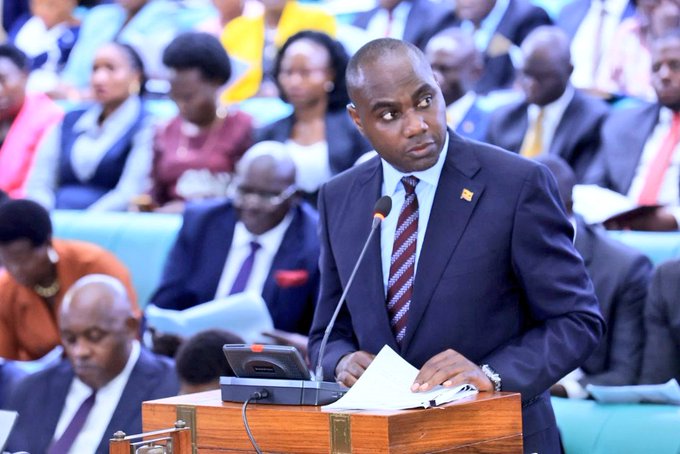
Presenting the proposal to Parliament, Finance Minister Matia Kasaija’s representative and State Minister for Finance (General Duties), Henry Musasizi, said the project is intended to enhance rural incomes through increased agricultural production and productivity enabled by irrigation.
“The goal of this project is to contribute to increased coffee yields through the provision of water for irrigation across 126 districts,” Mr Musasizi told lawmakers.
According to the minister, the second phase builds on the success of Phase I, which has achieved more than 99 per cent physical completion and delivered 434 solar-powered irrigation systems nationwide.
He said the completed phase has generated measurable economic benefits, improving water access and agricultural productivity for more than 206,000 households.
“Collectively, these initiatives have enhanced water security and productivity for 206,465 households and a total population of 908,447 people across Uganda,” Mr Musasizi said.
Climate Change Challenge
The minister told Parliament that the expansion of irrigation infrastructure is necessary to address the growing impact of climate change on agriculture, which remains the backbone of Uganda’s economy.
He noted that prolonged dry spells and declining water availability continue to affect crop production and household incomes, particularly among smallholder farmers.
“The effects of climate change are continuing to escalate, and the available water resources for agricultural production are constantly decreasing. Farmers are losing crops due to prolonged dry seasons, which negatively affects their livelihoods,” he said.
Government officials argue that increased irrigation coverage will help farmers maintain production throughout the year, reduce dependence on rainfall and improve resilience against extreme weather conditions.
Expected Benefits
Under Phase II, the project is expected to directly benefit approximately 2,562 households, translating into an estimated 11,785 direct beneficiaries.
Officials say the initiative will also create wider economic benefits through increased agricultural output, job creation and improved household incomes.
The programme will be implemented through existing agricultural extension structures at district, sub-county and parish levels, working closely with the Ministry of Agriculture, Animal Industry and Fisheries (MAAIF) and the Coffee Department.
The government hopes the project will contribute to broader efforts aimed at increasing agricultural exports, improving food security and supporting Uganda’s target of expanding coffee production.
Supporting Government’s Agricultural Agenda
Agriculture remains a key pillar of Uganda’s economy, employing the majority of the population and contributing significantly to export earnings.
Government has in recent years increased investment in irrigation infrastructure as part of its strategy to modernise agriculture and reduce farmers’ vulnerability to climate-related shocks.
Experts say irrigation is becoming increasingly important as weather patterns become more erratic, affecting crop yields and threatening food security in many parts of the country.
The approved loan is expected to strengthen Uganda’s capacity to adapt to climate change while supporting efforts to transform agriculture from subsistence farming to commercial production.
With Parliament’s approval secured, implementation of Phase II is expected to commence following the completion of the necessary financing and procurement processes.