










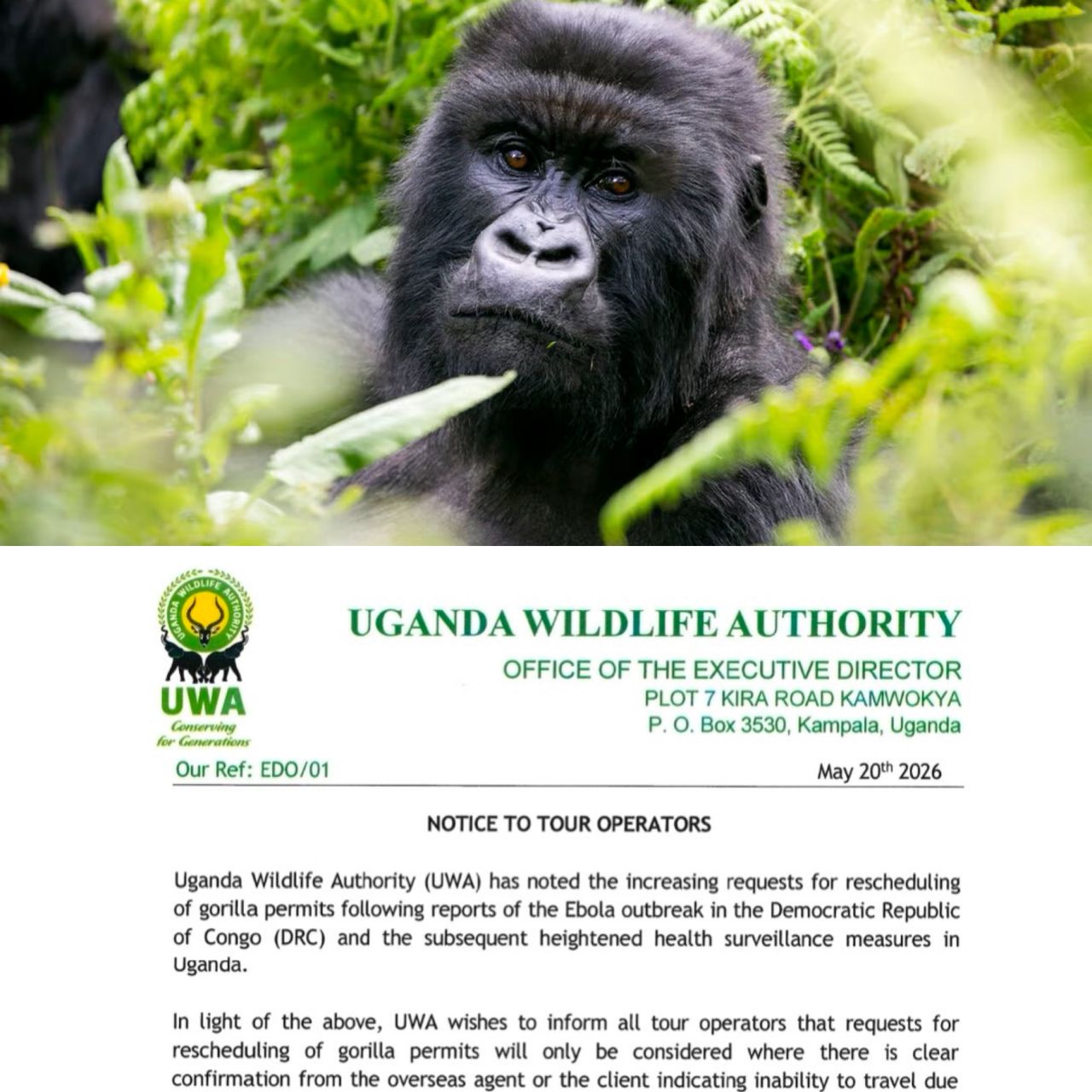
The Uganda Wildlife Authority (UWA) has announced a temporary measure allowing tour operators and their clients to reschedule gorilla trekking permits at no additional cost, following growing concerns linked to the Ebola outbreak in the neighbouring Democratic Republic of Congo.
The decision comes amid increased travel caution among international tourists and a rise in rescheduling requests from tour operators, as regional health authorities heighten surveillance measures across border areas.
In a notice dated May 20, 2026, signed by UWA Executive Director James Musinguzi, the authority confirmed that it had introduced a structured and controlled process to manage the requests while maintaining fairness within the gorilla permit reservation system.
According to UWA, the free rescheduling arrangement is intended to support affected clients without disrupting the integrity of Uganda’s carefully managed gorilla trekking system, which operates under strict daily visitor limits to protect endangered mountain gorillas.
However, the authority emphasized that rescheduling will not be automatic. Tour operators must provide written confirmation from either the overseas agent or the client clearly stating that the change in travel plans is directly related to Ebola concerns. This documentation must accompany all rescheduling requests for verification.
Once the request is validated, UWA will approve the rescheduling at no additional cost, subject to availability of permits on the requested alternative dates.
The authority further clarified that strict conditions will apply. Permit holders will only be allowed to shift bookings to dates with available slots, and low-season permits will only be rescheduled within the low season. UWA stressed that upgrades from low-season to peak-season trekking dates will not be permitted under the arrangement.
UWA said these measures are designed to balance flexibility for tourists affected by regional health concerns while safeguarding the integrity and sustainability of Uganda’s tourism products.
Uganda is home to nearly half of the world’s remaining mountain gorilla population, making gorilla trekking one of the country’s most valuable tourism attractions and a key source of revenue for conservation and community development.
The authority urged all tour operators to strictly adhere to the guidelines when submitting requests and reaffirmed its commitment to supporting the tourism sector while ensuring responsible wildlife management during the ongoing health situation in the region.
UWA also indicated that it will continue monitoring developments related to the Ebola situation and may adjust its guidelines depending on how the regional public health environment evolves.