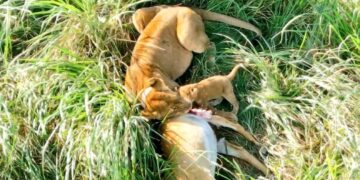















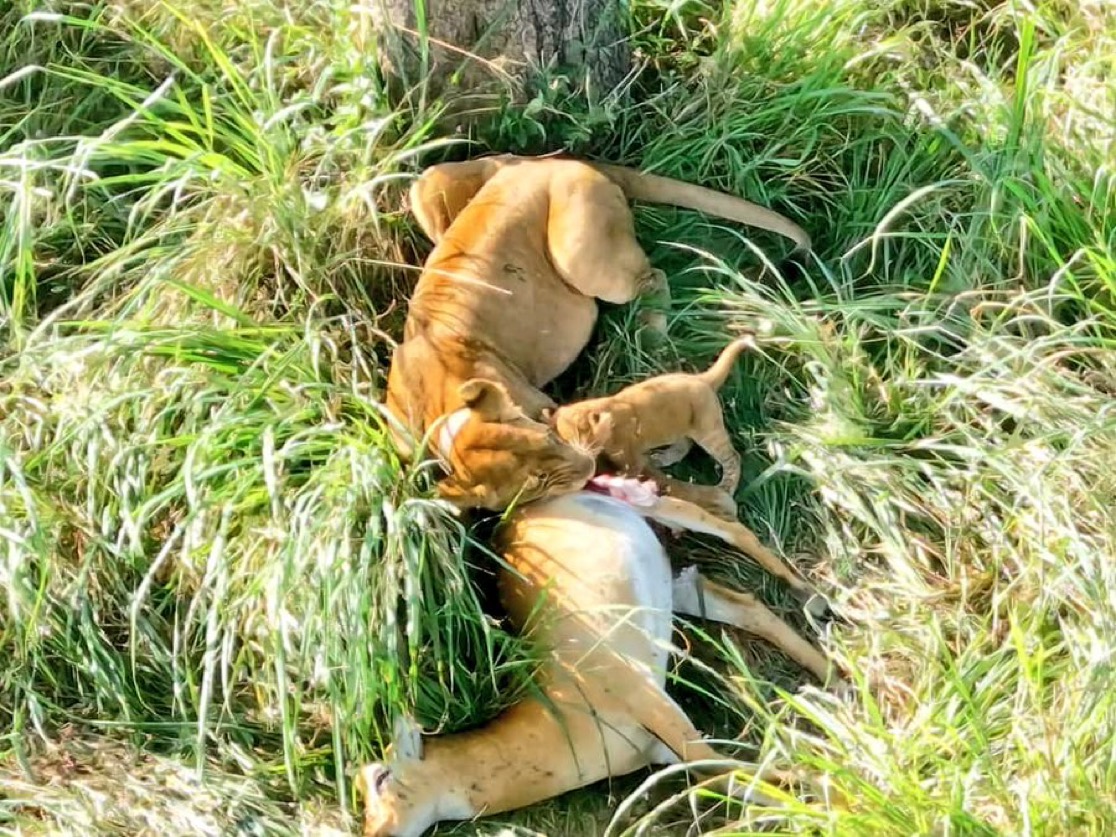
The Uganda Wildlife Authority (UWA) has announced the sighting of a newborn lion cub in the Ishasha sector of Queen Elizabeth National Park, describing the development as an encouraging milestone for wildlife conservation efforts in Uganda.
According to UWA, the cub was recently spotted in good health while feeding alongside its pride on a fresh kill, a sight that conservationists say signals positive progress in the protection and sustainability of the country’s lion population.
The authority noted that the sighting is particularly significant for the Ishasha sector, which is internationally renowned for its unique tree-climbing lions and remains one of Uganda’s most treasured wildlife tourism destinations.
UWA officials expressed optimism about the cub’s survival and growth, emphasizing that every successful birth contributes to the long-term conservation of lions in the park.
“This is a wonderful sight and a positive sign for the continued conservation of lions in the Ishasha sector,” UWA said in a statement. “We remain committed to protecting Uganda’s wildlife and ensuring that future generations continue to enjoy these iconic species.”
The birth comes at a time when conservation agencies across Africa are working to address challenges facing lion populations, including habitat loss, human-wildlife conflict, and poaching. Conservationists view the successful reproduction of lions in protected areas as a key indicator of a healthy ecosystem.
Located in the southern part of Queen Elizabeth National Park, the Ishasha sector attracts thousands of visitors annually who travel to witness the rare behavior of lions resting and hunting from fig trees. The area has become one of Uganda’s most iconic tourism attractions and a symbol of the country’s rich biodiversity.
Wildlife experts say the presence of a healthy cub within the pride demonstrates the effectiveness of ongoing conservation measures and habitat protection initiatives being implemented by UWA and its partners.
The sighting has been welcomed by conservationists, tourism stakeholders, and wildlife enthusiasts, who see it as a promising development for Uganda’s efforts to preserve its natural heritage and strengthen wildlife-based tourism.
As monitoring of the pride continues, UWA remains hopeful that the young cub will thrive and contribute to the growth of Uganda’s lion population, further reinforcing the country’s reputation as one of Africa’s leading wildlife destinations.