











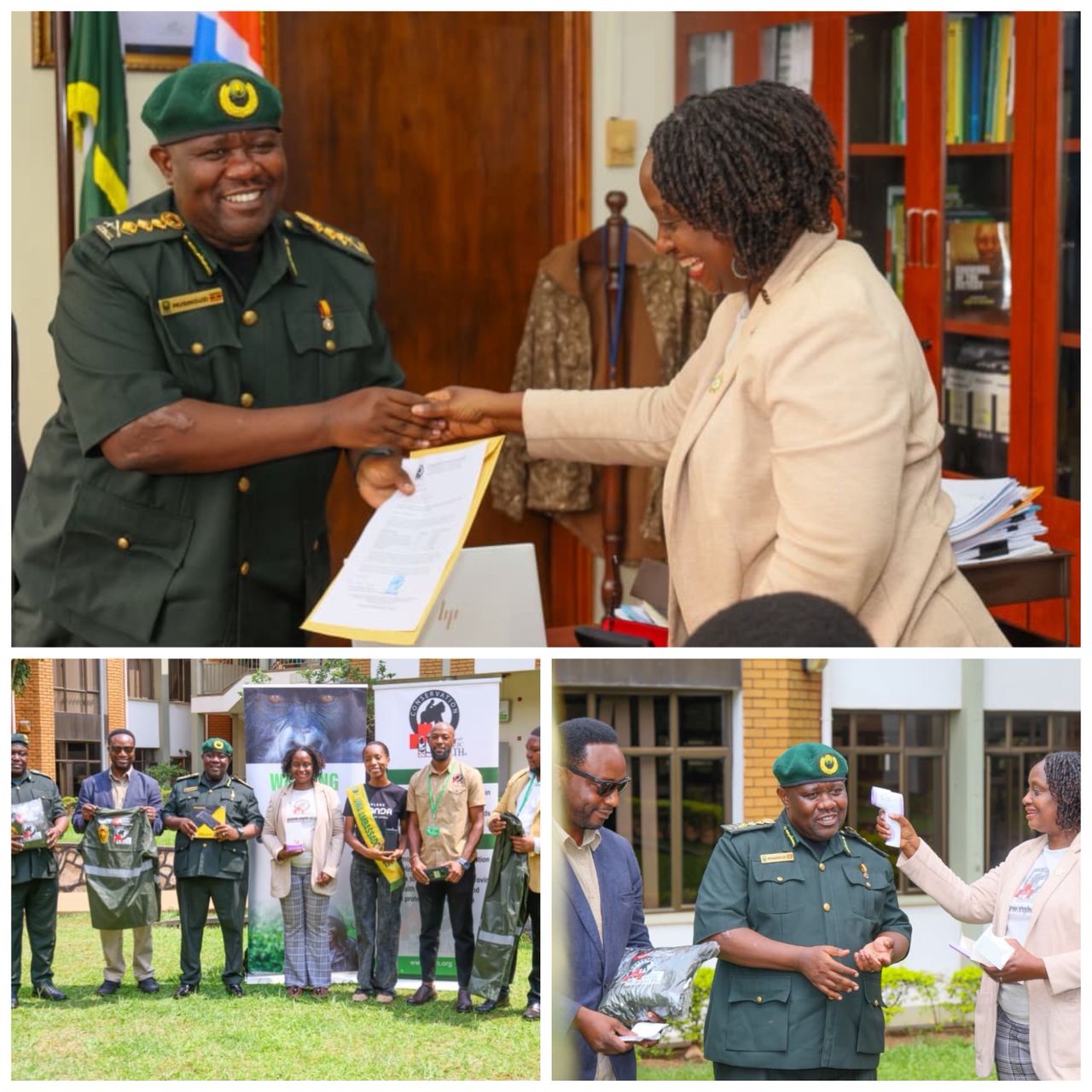
The Uganda Wildlife Authority (UWA) has received vital Ebola preparedness and disease surveillance equipment from Conservation Through Public Health (CTPH) to enhance monitoring and response efforts within the Bwindi Conservation Area.
The equipment, which includes digital thermometers, smartphones, solar-powered charging banks, and ranger rain gear, is expected to strengthen frontline disease surveillance, improve communication from remote field locations, and support the welfare of conservation staff operating in challenging terrain.
The handover is part of ongoing efforts to reinforce the One Health approach, which integrates the health of people, wildlife, and ecosystems. Bwindi Impenetrable National Park, a UNESCO World Heritage Site and home to nearly half of the world’s remaining mountain gorillas, remains a key conservation priority where disease surveillance is critical for both wildlife protection and public health.
Receiving the equipment, UWA Executive Director Dr James Musinguzi commended CTPH for its continued partnership in strengthening conservation and public health systems around protected areas.
He noted that Uganda’s preparedness against infectious diseases such as Ebola requires strong surveillance, timely reporting, and protection of frontline personnel working in high-risk environments.
“The support comes at a critical time. Effective surveillance and protection of frontline staff are essential for safeguarding both wildlife and human populations,” Dr Musinguzi said.
The smartphones and solar power banks will support real-time data collection and communication from remote areas, while thermometers will facilitate routine health screening. The ranger rain gear is expected to improve working conditions for field staff across varying weather conditions.
The donation comes amid heightened national vigilance following Ebola Virus Disease cases linked to cross-border transmission from the Democratic Republic of Congo. Government response efforts have recently shown progress, with health authorities reporting no new cases over several days, signaling improved control of the situation.
According to the Ministry of Health, Uganda has recorded confirmed Ebola cases, with recoveries registered alongside ongoing treatment and surveillance efforts.
Health officials continue to emphasize preventive measures, including hygiene practices, early reporting of symptoms, and avoiding contact with infected individuals, contaminated materials, or wildlife carcasses.
UWA says it remains committed to safeguarding visitors, staff, surrounding communities, and wildlife populations—particularly mountain gorillas, which are highly susceptible to human-transmitted diseases.
The Authority continues to work closely with government agencies, conservation partners, and local communities to strengthen surveillance systems, improve awareness, and ensure rapid response to any suspected outbreaks within protected areas.