









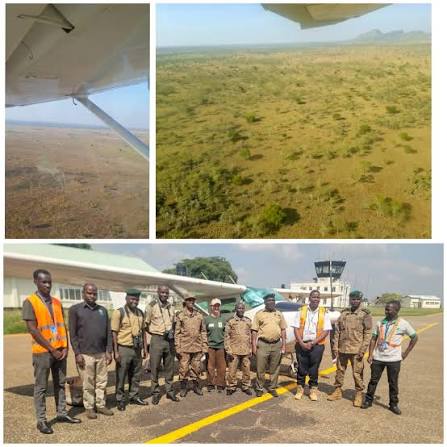
KAMPALA — The Uganda Wildlife Authority (UWA) has commenced a 10-day aerial wildlife survey over the Bokora–Matheniko Wildlife Reserve, a key conservation area within the larger Pian Upe Conservation Area, as part of efforts to strengthen biodiversity conservation through scientific research.
The survey is being conducted by UWA’s Division of Research and Ecological Monitoring with support from the Air Wing Division. The exercise is designed to gather updated information on wildlife populations, habitat conditions and conservation pressures to support informed management of the protected area.
According to UWA, the assessment follows the last comprehensive aerial survey undertaken in 2018 and will provide an opportunity to evaluate how wildlife populations and ecosystem conditions have changed over the past several years.
During the operation, researchers will estimate the abundance and distribution of major wildlife species while examining the condition of habitats across the reserve. The survey will also document human-induced pressures that may be affecting conservation efforts, including illegal livestock grazing and other forms of encroachment.
Officials say the findings will provide reliable scientific evidence to guide future conservation planning, improve wildlife protection strategies and strengthen the sustainable management of one of Uganda’s most important protected ecosystems.
UWA noted that continuous ecological monitoring remains a cornerstone of effective conservation, enabling the authority to detect changes in wildlife populations, respond to emerging threats and measure the impact of ongoing conservation initiatives.
The information generated through the survey is expected to contribute to policy formulation, resource allocation and long-term biodiversity management while reinforcing Uganda’s commitment to science-based conservation practices.
Located in northeastern Uganda, the Bokora–Matheniko Wildlife Reserve forms part of the expansive Pian Upe Conservation Area, which supports diverse wildlife species and serves as an important ecological corridor within the country’s protected area network.
UWA reaffirmed its commitment to safeguarding Uganda’s natural heritage through regular scientific assessments, emphasizing that evidence-based decision-making is essential for conserving wildlife and ensuring that protected areas continue to benefit both present and future generations.