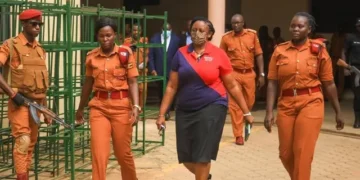












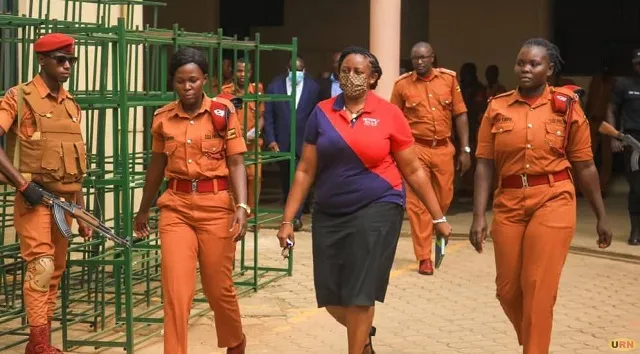
Kampala — Proceedings in the high-profile Shs3.8 billion cooperative compensation case involving former Ministry of Trade Permanent Secretary Geraldine Ssali and her co-accused have been halted pending a ruling by the Constitutional Court on alleged violations of fundamental rights.
The development follows a petition by one of the accused, Akamba, who claims he was subjected to torture during his arrest. He argues that his constitutional rights were infringed and is seeking dismissal of the charges, effectively shifting the matter into the realm of constitutional interpretation.
Ms Ssali is jointly charged alongside Igara East MP Michael Mawanda Maranga, Elgon County MP Ignatius Wamakuyu Mudimi, city lawyer Julius Taitankoko Kirya, and Principal Cooperative Officer Leonard Kavundira.
The group faces charges of abuse of office, conspiracy to defraud, causing financial loss, and money laundering linked to Shs3.8 billion meant for Buyaka Growers Cooperative Society Limited.
According to the prosecution, Ms Ssali irregularly included Buyaka Growers Cooperative Society on the list of beneficiaries for government compensation for war-related losses during the 2021/2022 financial year, despite the entity not appearing in the officially approved supplementary budget of August 4, 2021.
It is further alleged that during the 2021/2022 and 2022/2023 financial years, she authorised payments amounting to Shs3.8 billion to Kirya and Company Advocates in contravention of the 2017 Treasury Instructions.
Prosecutors contend that the accused either knew or ought to have known that their actions would result in financial loss to the government, an argument central to the state’s case.
Additionally, the state alleges that between 2019 and 2023, the accused conspired to defraud the government of Shs3.4 billion intended for compensating cooperatives affected during the 1981–1986 liberation war and subsequent insurgencies.
Proceedings before the Anti-Corruption Court have been marked by repeated disruptions. At one point, the case was adjourned due to the absence of the Assistant Registrar, compounded by the non-appearance of the prosecution, prompting defence lawyers to secure extensions of bail for all accused persons.
The delay highlights a growing pattern in Uganda’s high-profile corruption cases, where accused persons increasingly invoke constitutional safeguards to challenge the legality of their arrest and prosecution.
For now, the case remains in abeyance, with its future dependent on the Constitutional Court’s forthcoming ruling, one that could either revive the trial or bring it to an abrupt end.