









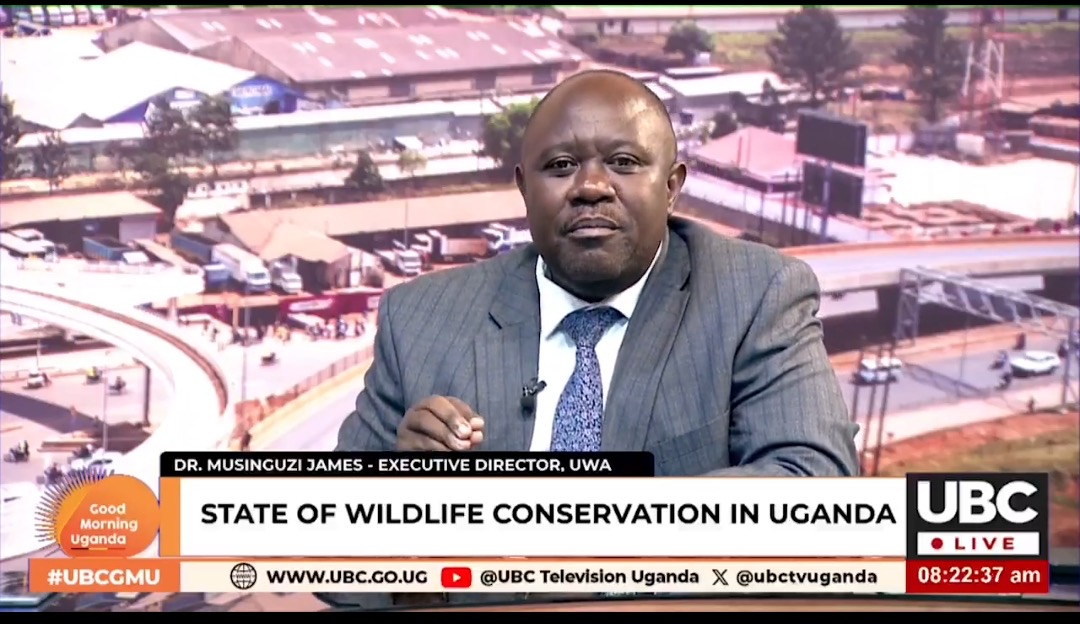
The Uganda Wildlife Authority (UWA) has moved to clarify the legal framework governing wildlife utilisation in Uganda following growing public debate over the sale and consumption of wild meat in the country.
The discussion gained momentum on social media after an X user questioned how a restaurant could legally serve wild meat while conservation agencies continue to promote wildlife protection and combat poaching.
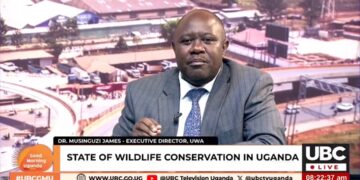
Responding to the concerns, UWA Executive Director Dr. James Musinguzi said Uganda’s wildlife laws provide for sustainable utilisation of wildlife resources under a regulated licensing system that balances conservation with economic development.
Speaking during an interview on UBC Television, Dr. Musinguzi explained that the law establishes various wildlife user rights that allow individuals and businesses to engage in approved wildlife-related activities under strict regulation and oversight.
“The law provides for sustainable wildlife utilisation, and it provides for wildlife user rights classes. Any individual in Uganda is free to come and carry out sustainable wildlife utilisation using the different classes of wildlife user rights that have been established,” he said.
According to Dr. Musinguzi, Uganda’s conservation model recognises that wildlife can generate socio-economic benefits while remaining protected through effective regulation.
He noted that activities such as wildlife ranching, wildlife farming, tourism, recreation, trade in wildlife products and other licensed enterprises are permitted under the law, provided operators comply with the conditions set by the regulator.
Addressing concerns surrounding the restaurant at the centre of the online debate, Dr. Musinguzi clarified that the establishment is legally licensed by UWA and does not source wild meat from Uganda’s protected wildlife populations.
Instead, he said, the meat is imported from countries with established wildlife production systems and is subject to strict monitoring procedures.
“The restaurant being talked about was licensed to import wild meat. This is not meat that is got within Uganda. It is wild meat imported from South Africa, Namibia and Botswana,” he explained.
Dr. Musinguzi revealed that UWA licensed the restaurant to import up to 800 kilogrammes of wild meat during the 2026 calendar year and that the authority tracks the consignments from the point of entry into the country.
“For example, we licensed that restaurant to import 800 kilogrammes of meat for the whole year of 2026, and we monitor that all through the border as they bring it,” he said.
He stressed that the arrangement differs significantly from illegal hunting and trafficking, which remain criminal offences under Uganda’s wildlife laws.
The clarification comes as UWA continues to strengthen conservation enforcement and modernise wildlife crime investigations.
Earlier this week, Dr. Musinguzi announced the establishment of Uganda’s Wildlife DNA Forensic Laboratory, a facility expected to enhance the country’s ability to investigate and prosecute wildlife crimes.
The laboratory will help authorities identify animal species, trace the origin of wildlife products and generate scientific evidence to support law enforcement efforts against poaching and illegal wildlife trade.
Conservation experts have described the facility as a significant milestone in strengthening wildlife protection and improving accountability within the sector.
Dr. Musinguzi said UWA remains committed to promoting responsible wildlife utilisation while safeguarding Uganda’s biodiversity for future generations.
He emphasised that regulated wildlife enterprises and conservation objectives are not mutually exclusive, arguing that sustainable utilisation can generate economic opportunities while supporting long-term conservation goals.
UWA has maintained that licensed wildlife products operate within a tightly controlled framework designed to prevent abuse, minimise pressure on wildlife populations and ensure compliance with national conservation policies.
As public discussion on wildlife utilisation continues, the authority has reiterated that there is a clear distinction between legally licensed wildlife products and illegally sourced bushmeat.
According to UWA, continued investments in scientific innovation, law enforcement, monitoring systems and regulatory oversight are helping Uganda strike a balance between conservation, economic opportunity and the sustainable use of natural resources.