











President Yoweri Kaguta Museveni has said Africa should prioritise electrification and industrialisation to sustainably manage the Nile waters, arguing that underdevelopment, not colonial agreements, is the real challenge facing the Nile Basin.
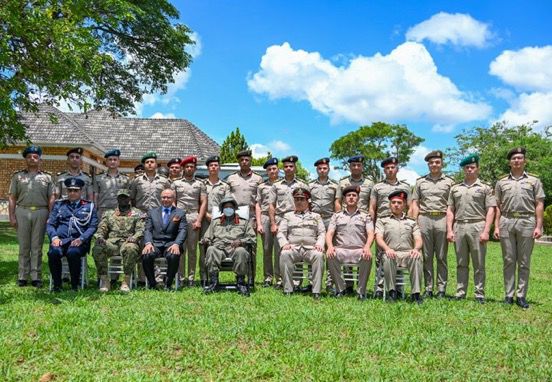
Speaking during a lecture to a delegation from the Egyptian Armed Forces Staff and Command College at the National Leadership Institute Kyankwanzi, the President emphasised that limited electricity access, low levels of industrialisation and climate change are key pressures affecting water resources in the region.
President Museveni said overreliance on biomass energy, including firewood and charcoal, has accelerated environmental degradation, which in turn threatens rivers, wetlands and forests that support the Nile system.
“The solution is electrification and industrialisation so that we protect the environment and sustainably manage our water resources,” he said.
He noted that expanding access to electricity would reduce deforestation and support economic transformation, while industrialisation would shift communities away from subsistence livelihoods that often lead to encroachment on fragile ecosystems.
He also highlighted climate change as a growing concern, saying changing weather patterns and prolonged dry spells are affecting water levels across the region, thus requiring coordinated efforts among Nile Basin countries.
Beyond the Nile question, Mr Museveni shared what he described as Africa’s historical missions, including rejecting identity-based politics in favour of nationalism and Pan-Africanism, promoting socio-economic transformation and advancing African unity.
He said these principles have guided Uganda’s development path and remain central to achieving sustainable growth across the continent.
The visiting Egyptian delegation also toured the Source of the Nile in Jinja, where they expressed appreciation for Uganda’s natural beauty and its strategic importance within the Nile Basin.
President Museveni welcomed the delegation to Uganda and wished them a productive stay, expressing optimism that the visit would strengthen cooperation and dialogue on shared regional interests, particularly sustainable management of the Nile waters.