










By Infora Media
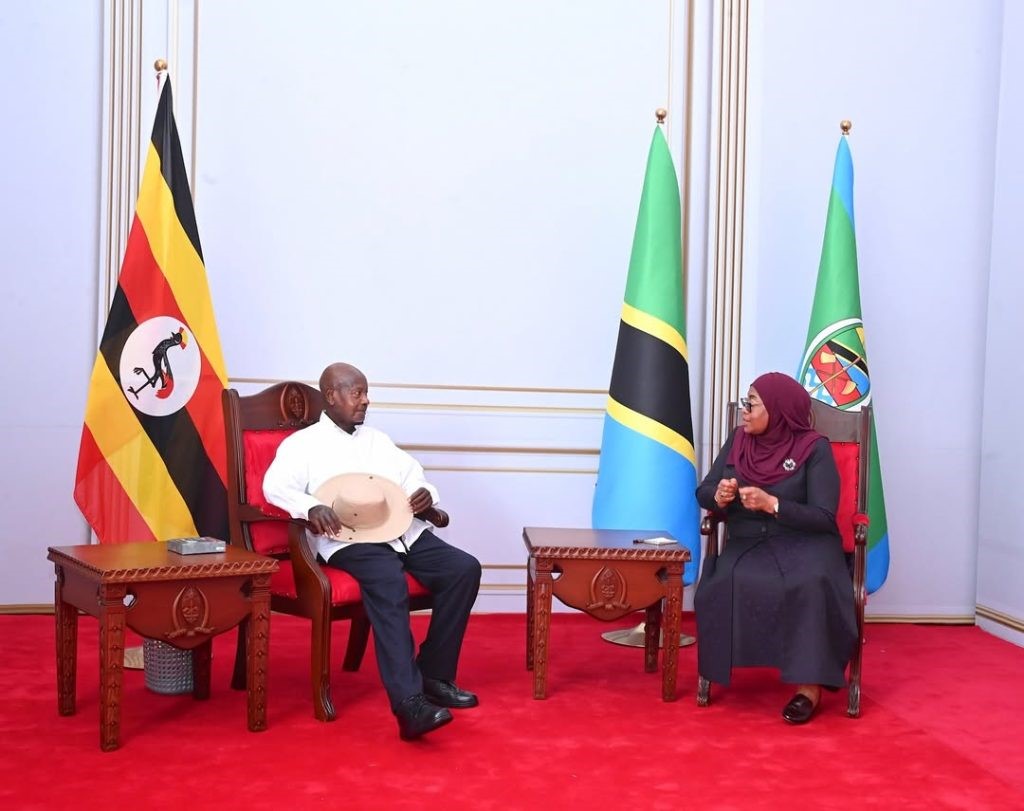
President Museveni held bilateral talks with President Samia Suluhu Hassan yesterday, focusing on trade, energy, and regional cooperation between Uganda and Tanzania. The one-day working visit underscored the long-standing and steadily growing ties between the two neighbouring countries.
During the discussions, the leaders reviewed progress in existing collaborations and explored new opportunities in economic development, trade, energy, and regional stability. A major focus of the talks was the East African Crude Oil Pipeline (EACOP) project, which will link Uganda’s oil fields in the Albertine Graben to the Tanzanian port of Tanga. The project is expected to generate significant benefits, including job creation, infrastructure development, increased investment, and enhanced regional energy security.
President Museveni tweeted:
“I have arrived in the United Republic of Tanzania on a working visit at the invitation of H.E. Samia Suluhu Hassan. We shall hold bilateral talks aimed at strengthening cooperation and deepening the long-standing relations between our two countries.”
At the conclusion of the talks, Presidents Museveni and Suluhu briefed the media, outlining the outcomes and the next steps for bilateral and regional cooperation.
Uganda and Tanzania are founding members of the East African Community (EAC) and have a long history of working together to promote trade, infrastructure development, and political stability. Through the EAC framework, the two countries have aligned policies on customs, movement of people and goods, and cross-border investment, fostering economic integration.
Tanzania remains a strategic transit corridor for Uganda’s imports and exports, particularly through the Port of Dar es Salaam, supported by improved road and rail networks. Bilateral trade has steadily grown, driven by business forums, private sector engagement, and government initiatives aimed at reducing trade barriers.
Beyond economic cooperation, the two countries maintain strong political and diplomatic ties, with regular high-level consultations. They also collaborate on regional platforms to address peace and security challenges in the Great Lakes Region and across Africa.
Social and cultural links further reinforce the relationship, with cross-border trade, migration, education, and cultural exchanges strengthening people-to-people connections between the two nations.