









By Infora Media
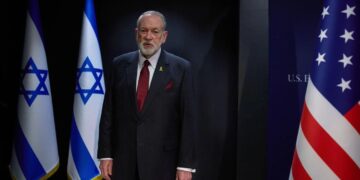
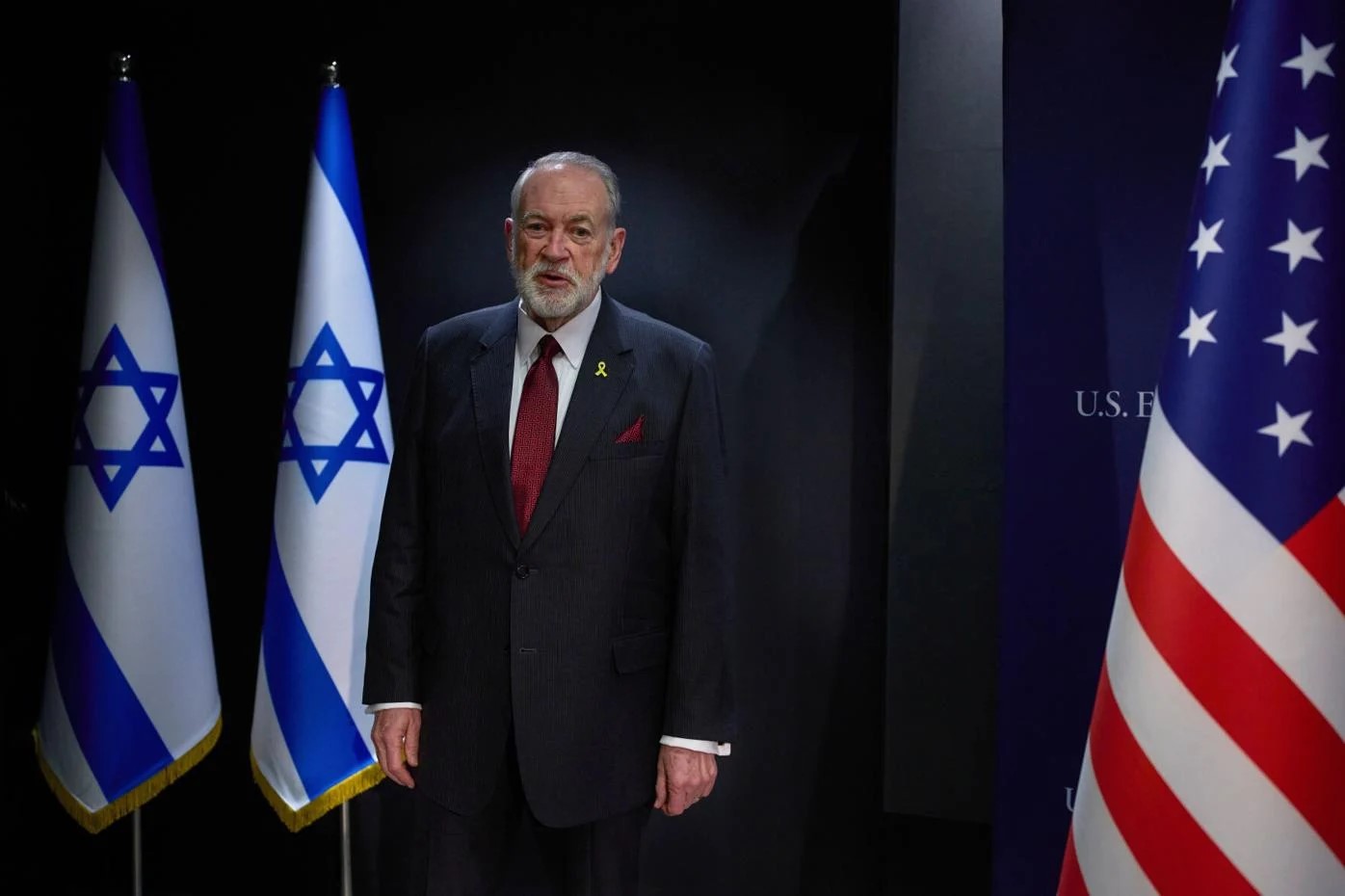
AP News: The United States Ambassador to Israel, Mike Huckabee, has sparked a major diplomatic uproar after suggesting in a recent interview that Israel could “take” large parts of the Middle East based on a biblical interpretation, remarks widely condemned across the Arab and Muslim world as dangerous, inflammatory and contrary to international law.
In a discussion with American commentator Tucker Carlson, Huckabee referenced the biblical promise in Genesis that some interpret as granting the land from the Nile in Egypt to the Euphrates River to the descendants of Abraham. When pressed about whether Israel had a right to such territory, he said “it would be fine if they took it all.” He later attempted to clarify that Israel was not seeking territorial expansion and that his initial comment was “somewhat hyperbolic.”
Huckabee’s comments drew swift and strong reactions from numerous Arab and Muslim-majority governments and regional organisations:
More than a dozen foreign ministries, including those of Saudi Arabia, Egypt, Jordan, Qatar, Kuwait, Oman, Turkey, the UAE, Bahrain, Lebanon, Syria, Pakistan, Indonesia and the State of Palestine, issued a joint statement condemning the remarks as “dangerous and inflammatory” and inconsistent with international law.
The Arab League, Organisation of Islamic Cooperation (OIC) and Gulf Cooperation Council (GCC) also denounced the ambassador’s words, warning they could undermine peace efforts and escalate tensions in the region.
Saudi Arabia labelled the statements “reckless” and “irresponsible”, while Jordan called them “an assault on the sovereignty of the countries of the region.” Kuwait described them as a “flagrant violation of international law.”
Egypt reiterated that Israel has no sovereignty over the occupied Palestinian territory or any other Arab lands, reinforcing long‑standing regional positions.
The Palestinian Authority also weighed in, accusing Huckabee’s remarks of contradicting the United States’ stated opposition to annexing the West Bank and of supporting policies that could fuel ethnic cleansing and displacement.
The US Embassy in Israel responded by saying Huckabee’s remarks were taken out of context and do not reflect any official shift in Washington’s policy regarding Israel’s borders or the peace process.
Nonetheless, regional analysts say the controversy comes amid sensitivities over ongoing conflicts in Gaza and fears of wider instability in the Middle East. They warn that such statements, even if informal, risk damaging trust and complicating efforts toward a negotiated settlement.
For many Arab and Muslim governments, Huckabee’s comments touched on deeply rooted issues of sovereignty, territorial integrity and the future of the Palestinian territories. Leaders stressed that endorsing expansive territorial claims based on religious narratives, rather than international law, could undermine decades of diplomatic efforts aimed at achieving peace and provoke further regional tensions.